


Last month, Coral Gables’ inaugural Day of Design took over the city’s design district. The event brought together more than 400 guests and united showrooms, architects, designers, civic leaders, and national design media for an afternoon-into-evening celebration of craftsmanship and creativity. Produced by Cordero Consulting, the program moved across four destinations: Maison Mischief, the Coral Gables Museum, Scavolini, and Maison & Co.
A highlight of the day was “Materials, Mastery, & Meaning: The Art of Enduring Design,” a conversation moderated by Harriet Mays Powell, Editor-in-Chief of Palm Beach Cottages & Gardens at the Coral Gables Museum. Panelists Luciana Fragali of Design Solutions Miami, Jacqueline Gonzalez Touzet of Touzet Studio, Jorge L. Hernandez of JLH Architect, and Jorge Bernal of Perkins & Will Miami Studio explored how thoughtful materials, generational craftsmanship, and meaning transform a structure into an inheritance.
For those who didn’t get a chance to ask their questions at the panel, we tapped these creatives for additional insights and shared their wisdom below.

Harriet Mays Powell, Jorge L. Hernandez, Jacqueline Gonzalez Touzet, Jorge Bernal, and Luciana Fragalo

Harriet Mays Powell, Jorge L. Hernandez, Jacqueline Gonzalez Touzet, Jorge Bernal, and Luciana Fragalo
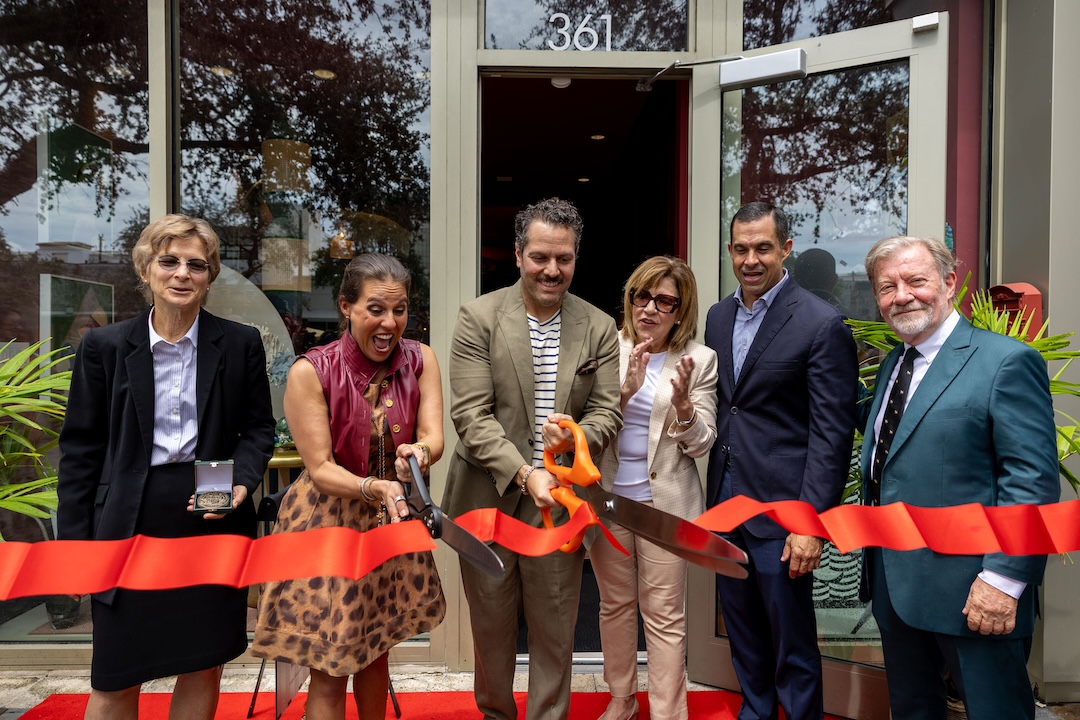
Vice Mayor Rhonda Anderson, Katie & Ruben Gutierrez, Gloria Baez , Mayor Vince Lago, and JP Faber
For Jorge L. Hernandez: Coral Gables has such a strong architectural identity rooted in Mediterranean Revival. How do you honor that heritage in new work without it feeling like pastiche?
Jorge L. Hernandez: This task requires authenticity; it demands dedication and seriousness of purpose and a real understanding of the architectural traditions studied. The task also requires the aspiration to expand tradition by studied contributions grounded in our time and context. Pastiche involves a precursory look back. Honoring past heritage demands looking forward with knowledge of the past.
For Jorge Bernal: At the scale Perkins & Will works, how do you keep craft and material honesty from getting value-engineered out of a project?
Jorge Bernal: We want to be clear that though we are the second-largest architecture and design firm in the world, our studios are local first, and our projects range from small rooms to cities…So, it really comes down to the personal relationships we as partners have locally, regionally, and globally.
With that said, value engineering is part of almost every project. The challenge is making sure it does not become an exercise in stripping away the very things that give a project its character, durability, and sense of care. For us, the best protection starts with a strong foundation.
“It helps to have clients with vision—clients who understand that craft and materiality are not just ‘nice to have’ items that can be removed when budgets get tight. They are often what make a project feel meaningful, connected to its place, and built to last. When a client believes in the bigger idea, it is much easier to have productive conversations about where to save and where to hold the line.”
—Jorge Bernal
Then, the project needs a clear design concept and story. When the concept is strong, every decision has something to be measured against. Instead of debating each material or detail as an isolated cost item, the team can ask: “Does this still support what the project is trying to be?” That does not mean every original material or detail has to remain exactly as designed. But it does mean substitutions and simplifications should preserve the same intent, performance, and experience.
The third piece is a design team that is aligned around craft and materiality. That alignment needs to happen early—not after the budget is already under pressure. We try to identify the elements that really matter to the experience of the building: the moments people touch, see up close, gather around, or remember. Then we can be strategic about where to invest. Not every part of a building needs to be equally elaborate, but the important moments should feel intentional and well resolved.
