


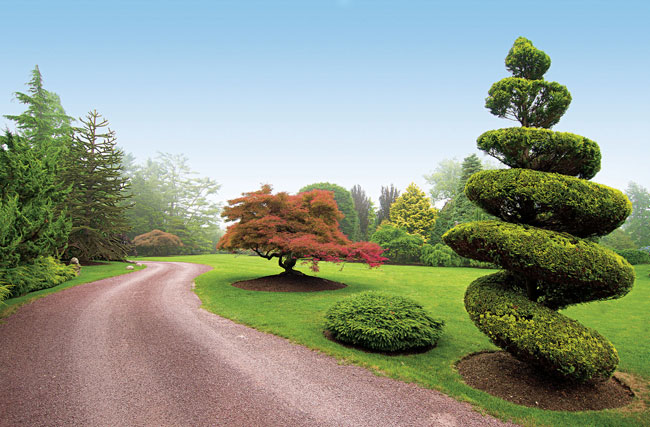
Drive-In Theater | A sumptuous Japanese maple and a whimsically topiaried juniper grace Woodhouse Park, the East Hampton property of Tony Ingrao and Randy Kemper. The garden is one of almost two dozen featured in Jack deLashmet’s new book, Hamptons Gardens (Assouline).

What makes gardening in the Hamptons so special?
Jack deLashmet: The Hamptons is only about 450 square miles, but it’s the epicenter of garden design in America—although some people in California might take issue with that! Besides the microclimates and the great soil, there’s an incredible history of gardens dating back to the 17th century, along with today’s talented designers and homeowners, who tend to be on the cutting edge of ecological issues and contemporary gardening trends
There’s a big contrast between romantic and modernist gardens in your book. Do you see either winning out?
JD: People are more interested in a cleaner line today. Even if they want a romantic garden, they want less clutter, something that’s easy to take care of. Landscapes that require tons of water, which could be considered romantic, are less interesting to clients now, and many people are incorporating native grasses into their garden designs, which is good. Even the most formal estate gardens have more native plants now, so there’s much more sophistication in gardening overall.

Most of the book’s gardens are grand, with designers and crews that tend to them. What can the weekend gardener take away from these images?
JD: The common denominator of these gardens is that the owner and the designer looked at the surroundings together and were incredibly aware of the setting in a bigger sense. There was a grand scheme in their heads, a specific intent—although things can and often do develop in a different direction sometimes. Even the owner of the smallest property can go about addressing a garden in this way. And three of the gardens in the book are under an acre.
What’s the most overused plant in the Hamptons today?
JD: Privet! It’s so overplanted that diseases are gaining a foothold in some grand old hedges. And the most incorrectly used plant is the Colorado blue spruce—it’s supposed to be in Colorado!
What’s your favorite “natural” landscape?
JD: Kettle ponds, like Trout Pond in Noyac. I love things that grow around them: low- and high-bush blueberries, shad, the occasional dogwood, beech and all the rest. I love the scruffiness of it.
Which Hamptons gardener do you most admire?
JD: Fleurette Guilloz, a “gardener’s gardener,” now in her 90s, of exceptional talent. She is a local treasure, and much more influential than she will ever know.
What are the hallmarks of a Jack deLashmet garden?
JD: Good Lord! I would hope that one couldn’t recognize any of my gardens—I hope my touch is light. Most important, I’m always respectful of the surroundings.
What are you working on now?
JD: We have 12 installations in progress, all crazily diverse, plus I’m working on a fantastic 1920s house in Dallas. And I’ve just been asked to advise on reestablishing native habitats on Saranac Lake in the Adirondacks.
What excites you about the future of gardening in the U.S.?
JD: Kids are growing up learning about the importance of the environment—about native plants, recycling and sustainability. The language today is a lot different from what we were speaking long ago.
