


Hiking through the many woodland trails of eastern Long Island on a crisp fall day can energize the body and mind. As the leaves drop and the sunlight shifts, overgrown vines of wild wisteria, bittersweet, honeysuckle, and Virginia creeper reveal themselves, perhaps begging to be tamed or shaped into sculptural wall assemblages.
“I’ve always been fascinated by the different textures and species of vines and trees,” says Bellport artist Jay Sylvester, who has been creating thought-provoking commissioned works made of natural materials for private collectors since 2020. Having been raised in Massachusetts, Sylvester recounts his pre-internet childhood, when playing in forests, building treehouses, and collecting branches were the norm, later inspiring the incorporation of found objects into his current medium.
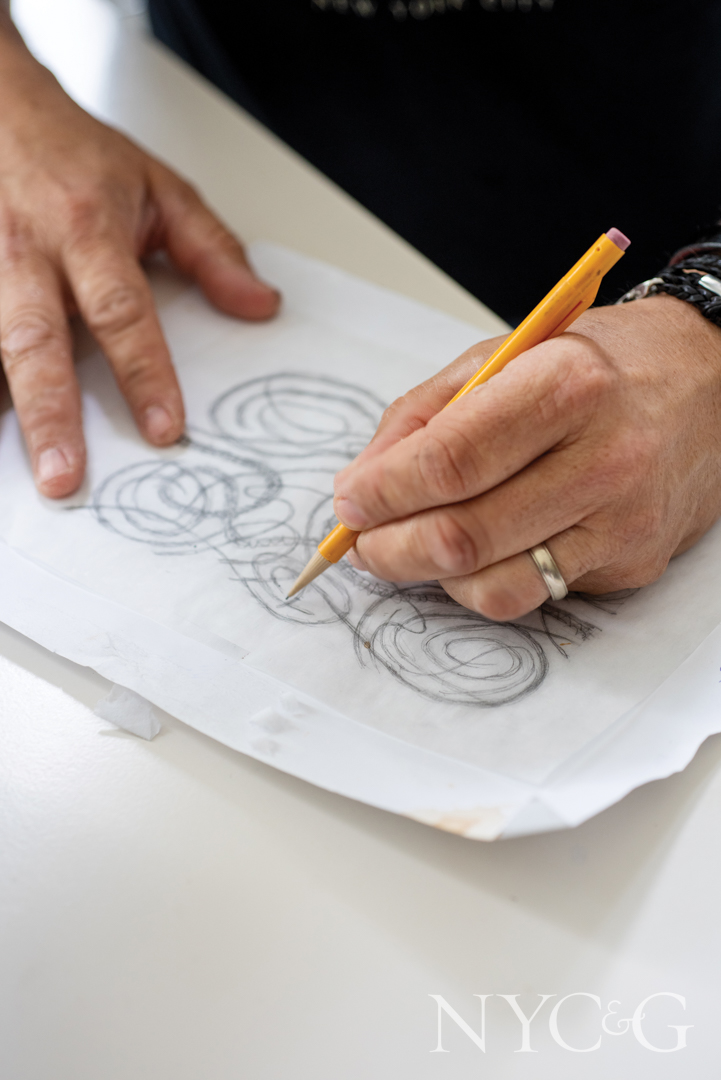
The artist begins with a sketch of the piece before foraging for vines and natural materials.
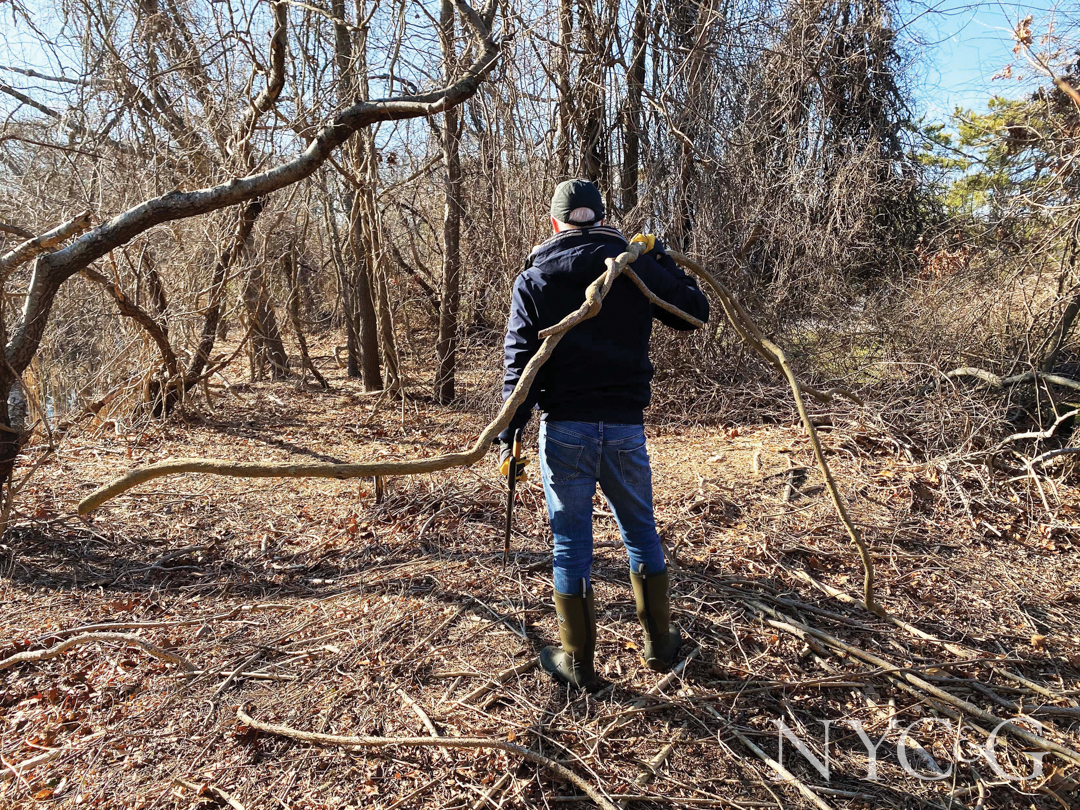
Sylvester forages for materials in local woods and forests for his assemblages.

Working on the floor of his studio, Sylvester positions, ties, glues, paints, and seals the assemblages before installing them on a wall.
“Foraging in the woods is the first step in creating the piece,” explains the Pratt Institute graduate. “Freshly cut vines are more pliable and more likely to flow into circuitous shapes.” Referring to the process as a “wrestling match,” with a desire to merge with the materials’ “innate qualities,” Sylvester positions and twine-ties the wild vines at his Bellport studio, using weights and, at times, literally screwing the material to the floor. “It takes a little bit of trial and error for the vines to stay the way I want them,” he explains.
From an initial sketch, Sylvester delineates a perimeter on the floor, allowing the vines to meander beyond that frame “until I feel that I’ve achieved what I want to achieve.” Using a pruner, he cuts the vines to work within that framework. “People will often say, while looking at the piece head-on, that they’ll be following the line of a vine, and it will just go off the page,” says the artist. “So you’re playing with negative and positive space,” he continues. “I like playing with that tension.”

Many assemblages retain their natural color or painted neutral tones of matte black or white, followed by a wood glue and polymer sealant that dries translucent and creates a water-resistant barrier. While there is undoubtedly a physicality in working with these materials, Sylvester finds the mesmerizing visual flow of the work most compelling.
“When it comes off the floor and onto the wall, I hope some of that energy translates to the viewer,” the artist reiterates.“When possible, I always like to be present for the installation of my work,” says Sylvester, who uses brackets that allow the work to float off the wall. “The light and the shadow add another layer to my work. As the shadows change during the day, the piece energizes even more. And that’s what I am trying to accomplish.”
