


“Magical” is the word visitors use most often when asked for their impressions of Madoo—so much so that it could be a tagline for this sixty-year-old garden located on a scant two acres on the eastern end of Long Island. But perhaps not the magical fairy garden that Robert Dash, Madoo’s founder, once described it as; rather, it’s more the kind of place you can get lost in, that surprises you at every turn just when you think you have it all figured out.
So, what makes Madoo so magical? It can certainly be peaceful in an otherworldly way when you are walking among its skinny sky-high ginkgoes or ambling alongside the Rill and its gently bubbling pools. The colorful hardscaping and painted trim on its two principal structures undoubtedly signify an enchanted garden. And the dahlia bed, a riot of color tucked away in a far corner of the potager, beyond the brussels sprouts and asparagus, is decidedly more surprising than a rabbit coming out of a hat.

Even the weeds, special in their own right and perfectly imperfect, might come across as magical. The water might be murky in the pond and dying water lily leaves not yet removed, but that’s of no consequence to the frogs happily sunning themselves on the voluminous pads while dragonflies hover above.
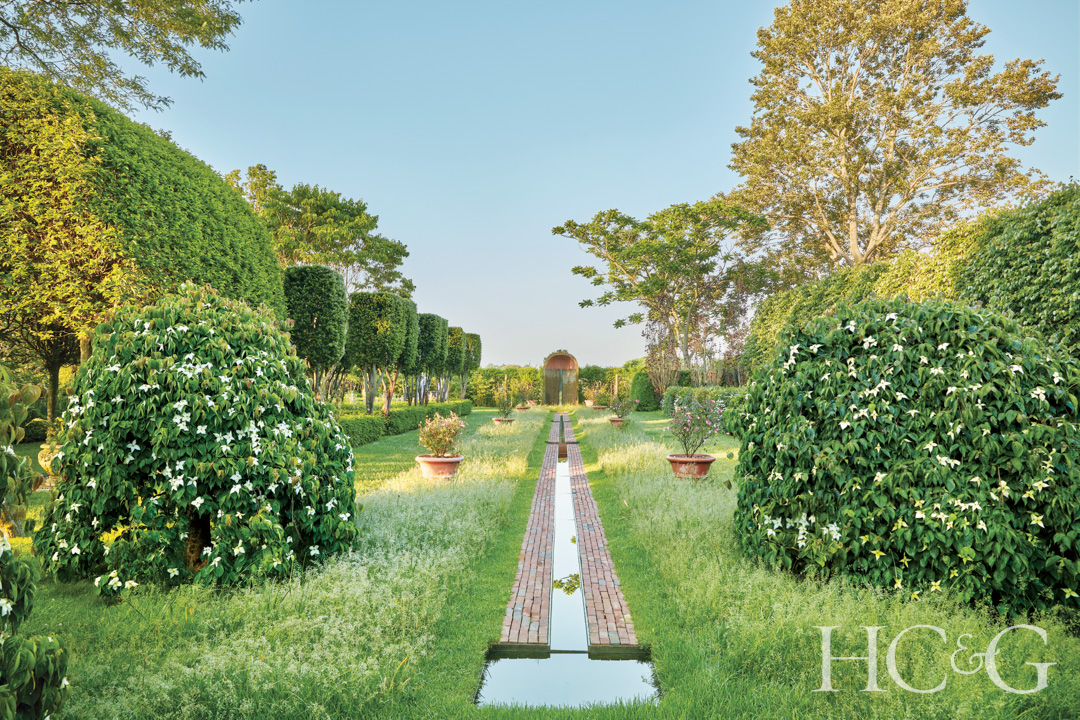
Four meticulously pruned dwarf weeping kousa dogwoods, planted by Dash, lie at the head of the Rill. Pots on either side of the water feature contain Rosa mutabilis, a species rose whose blossoms change colors from pale pink to a bright coppery orange.

The fan-shaped leaves of the ginkgoes filter the sunlight on an early fall afternoon. The trees were planted as 6-foot-tall saplings in the early 1980s and are anchored by a mature set of boxwood balls.

Little is known about the double bentwood rocker that has faced the low picture window and its mesmerizing view of the Secret Garden since the 1970s. Mirrors collected by Dash hang on the far wall. To the left is Dash’s 1972 rendering of the dining area; at far right, a vintage apothecary vase occupies a table.

As summer begins in earnest, the pond goes green except for the flowering water lilies in its upper and lower levels, where frogs sun themselves on the leaves. Forming a verdant backdrop to the bridge are a multistemmed Cryptomeria japonica and a weeping beech (Fagus sylvatica ‘Pendula’). In mid-May, the fully leafed-out beech forms a magical “doorway” to the garden, a transporting experience.
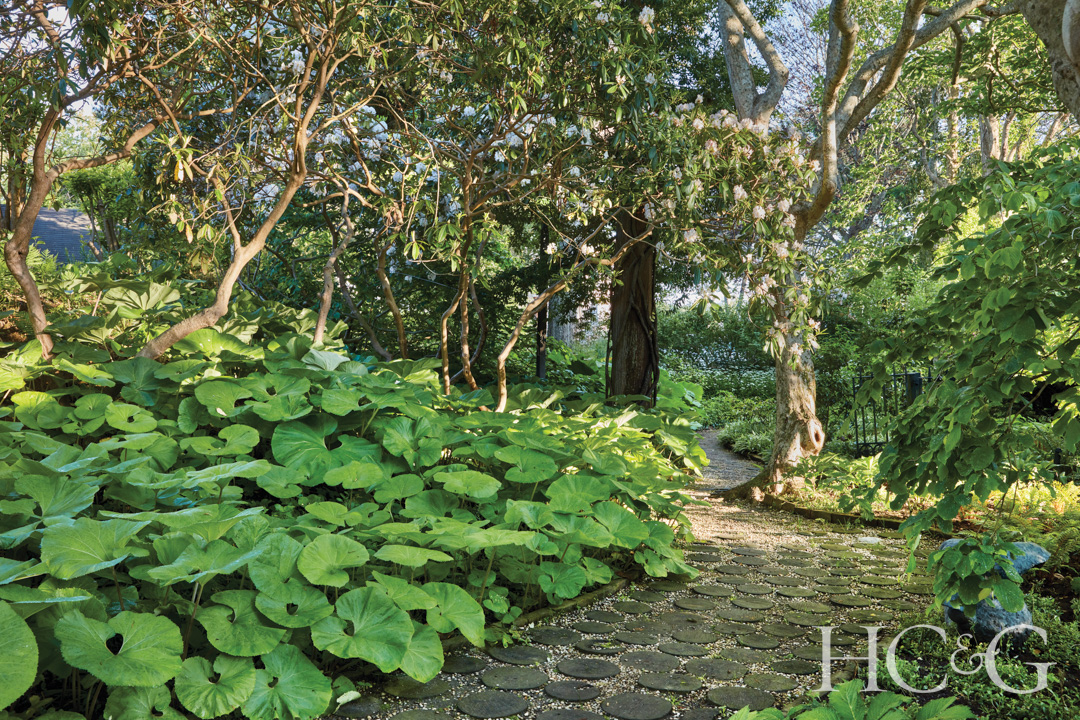
A sea of Petasites japonicus, hemmed in by the telephone pole path, floats on a berm planted with limbed-up rhododendrons.

Paths through the Ginkgo Grove were created long after the trees were planted. A clump of gooseneck loosestrife next to the Gazebo is routinely managed to keep it from spreading.
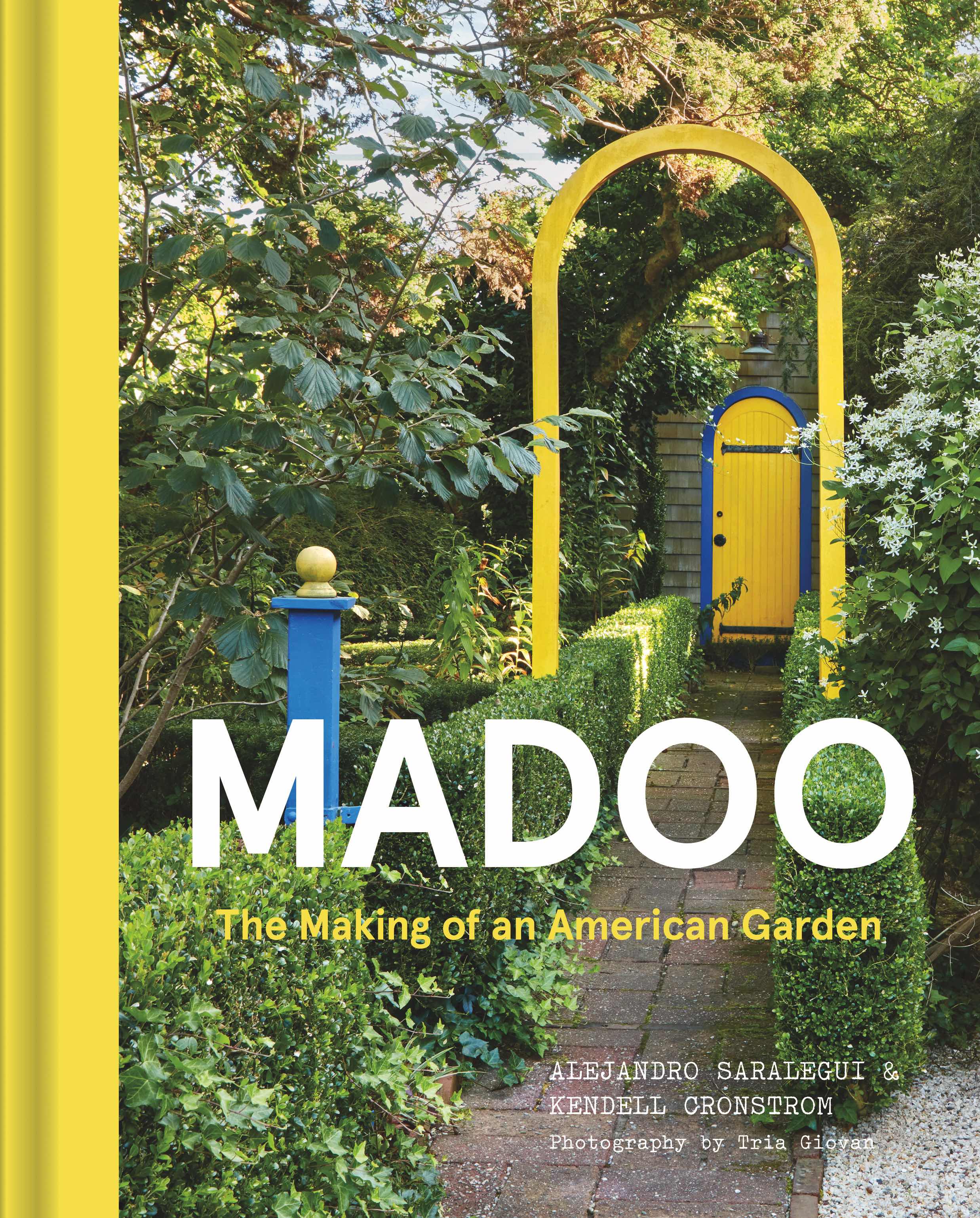
The book’s cover.
In this organic garden, nothing is ever especially precise. The lawns teem with clover and dandelions, which are never eradicated, as they are an early source of nectar for pollinating bees. The hedges come across as a bit untidy, but that’s just what gives the garden its romantic panache. And the roses—yes, they’re grown without pesticides and chemical fertilizers—look fabulous in bloom and then fade away until their hips start showing. Never mind blackspot—something else will quickly divert a visitor’s attention.

