


My wine travels often take me on intercontinental flights to far-flung wine regions, but this June I boarded a 90-minute hop to upstate New York to the Finger Lakes, where winemakers craft cool-climate wines using a fascinating mix of offbeat methods and philosophies. Among the many innovators I met on my whirlwind tour, there was a terroirist who follows Burgundian premier cru and grand cru vineyard designations; a biodynamic practitioner with sheep and geese roaming his biodiverse vineyards; and a winemaker who produces sparkling wines using the Solera method.
What these and other top producers have in common is their lakeside location. Most are on Seneca Lake, which is 40 miles long and the deepest lake that never freezes. The eastern side of Seneca Lake is considered the gold coast. Keuka Lake, another desirable site, is smaller and extremely scenic, with wineries perched on high hills, their vineyards sloping down toward the shore.

In 2006, there were 36 wineries on Seneca Lake. “Suddenly, young winemakers from France, Germany, and California started coming, and the number swelled to 80,” says Scott Osborn, co-owner of Fox Run Vineyards, known for its Riesling, which was served at President Obama’s second inauguration.
Riesling and sparkling wine are the region’s star attractions. The dry Rieslings are especially compelling: bright, floral, and citrus-driven, often with a saline finish that makes them mouthwatering and refreshing. The Méthode Champenoise sparkling wines, made from Chardonnay and Pinot Noir grapes and aged on the lees, are equally impressive, with refinement and fine bubbles. Sparkling Riesling Brut is another standout.
Carved by glaciers during the Ice Age, the Finger Lakes—eleven lakes spanning 5.4 million acres south of Lake Ontario—had been growing hybrid grapes since the late 19th century, when some 50 wineries cultivated 20,000 acres. In the 1960s, pioneering winemaker Dr. Konstantin Frank, a Ukrainian-born viticulturist working with Cornell University, proved that Vitis vinifera grapes such as Riesling, Chardonnay, and Pinot Noir could thrive in this cool climate. His wines firmly established the Finger Lakes on the fine wine map.

Today, the fourth-generation, family-owned Dr. Konstantin Frank Winery on the shores of Keuka Lake excels at Riesling and Méthode Champenoise sparkling wines. Its “lake effect” terroir makes European varieties possible here: the lake moderates wind and temperature, shielding vines under winter snow, delaying spring bud break until frost danger passes, and extending the fall growing season.
Many of the wineries I visited are run by international winemakers. At Living Roots, owners Sebastian and Colleen Hardy—he’s from Australia, she’s from upstate New York—harvest twice a year, splitting their time between the Finger Lakes and South Australia. Their beautifully designed winery on a hilltop with a jaw-dropping view of Keuka Lake opened in 2023. Using wild ferments and minimal intervention, they make impressive bone-dry Riesling.

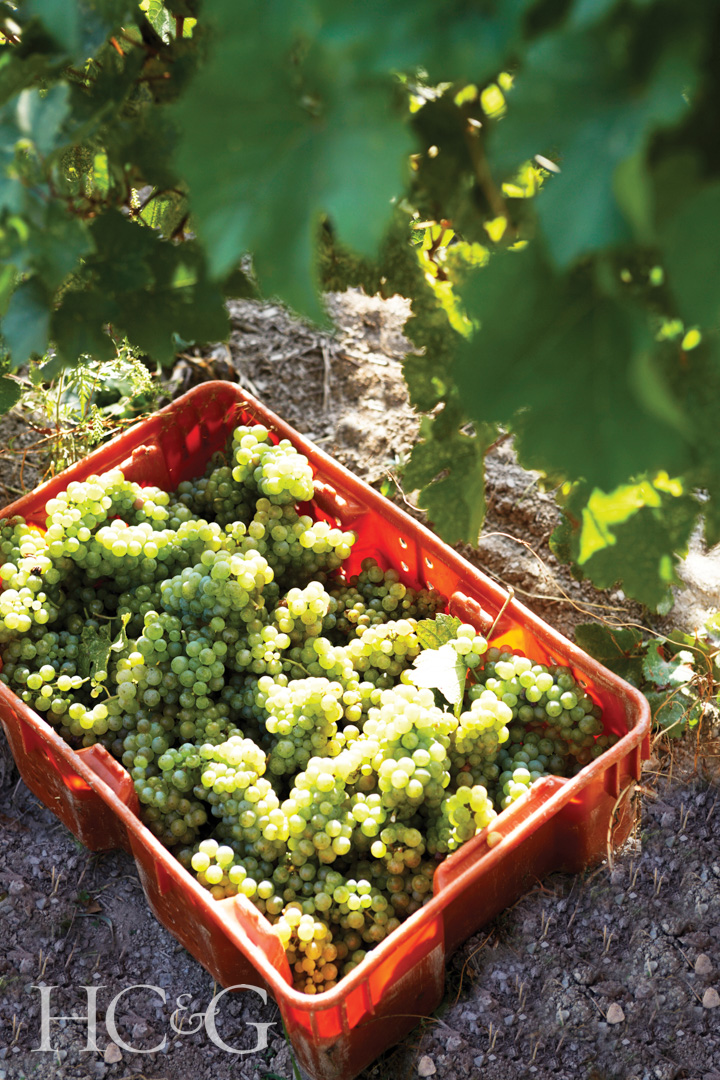
Harvest of Demeter Certified Biodynamic Riesling grapes from Hermann J. Wiemer Vineyard.


On the eastern shores of Seneca Lake, the 55-acre Boundary Breaks Vineyard is another spectacular property. Its vineyards slope down to the lake’s shores, flanked by forest on either side. Bruce Murray and Diana Lyttle, another winemaking couple, have farmed this prized lakeside terroir for 36 years, using precise viticulture to produce the healthiest fruit. “Each vine is touched 12 times a year,” Murray explains as we walk the vineyards, with vineyard manager Kees Stapel demonstrating pruning techniques.
When it started, Boundary Breaks planted a wide range of Riesling clones. No. 239 became the leading clone, lending its name to their signature dry Riesling.
Cabernet Franc has also thrived in the region since Cornell University researchers brought winegrowers from Château Cheval Blanc—whose Bordeaux blend comprises over 50% Cabernet Franc—to the area 15 years ago to teach locals how to master the varietal. In recent years, wine producers from Long Island, the Hudson Valley, and the Finger Lakes have banded together under a new initiative, “Cab Franc Forward,” to promote the state’s top-notch Cabernet Franc. (The Long Island members include Wölffer, Macari, and Paumanok.)

Hermann J. Wiemer Vineyard, one of the Finger Lakes’ original wine pioneers, has become a leader in the Cabernet Franc initiative. German-born Hermann Wiemer purchased the 150-acre site in 1973 and started a nursery specializing in custom grafting, supplying grapevines to vineyards countrywide. In the mid-’80s, he began focusing on sparkling wines made from Chardonnay and Pinot Noir and soon developed a cult following. In 2007, under new Swedish co-owner Oskar Bynke, the winery transitioned to biodynamic viticulture.
Bynke follows esoteric farming practices pioneered by Rudolf Steiner in the 1920s, including burying animal horns in the soil. Geese, sheep, and chickens bring diversity and add to natural composting. “Our 33-acre HJW Vineyard is the only Demeter Certified Biodynamic vineyard in the Northeast,” Bynke tells me. The winery produces excellent Riesling, Cabernet Franc, and sparkling wines, and its nursery is thriving.

At Forge Cellars, another leading producer, you’ll find 14 generations of French winemaking knowledge imported from Gigondas. Before coming to the Finger Lakes, winemaker Louis Barruol led his family’s storied Château de Saint Cosme in the southern Rhône. Full of vibrancy and vigor, he classifies his wines, like Burgundy, as premier cru and grand cru. He sources from 16 vineyard sites, ferments in small lots in French barriques, and bottles with very low sulfur, unfined and unfiltered. “Our wines balance minerality and aromatics and reflect our southeast Seneca Lake’s exceptional terroir,” winemaker Léana Godard tells me, pointing to a map of their single vineyards, which they call lieux-dits. “Salinity in the wine is how you recognize Finger Lakes,” she notes. “There are pockets of salt in the earth beneath the lakes.”
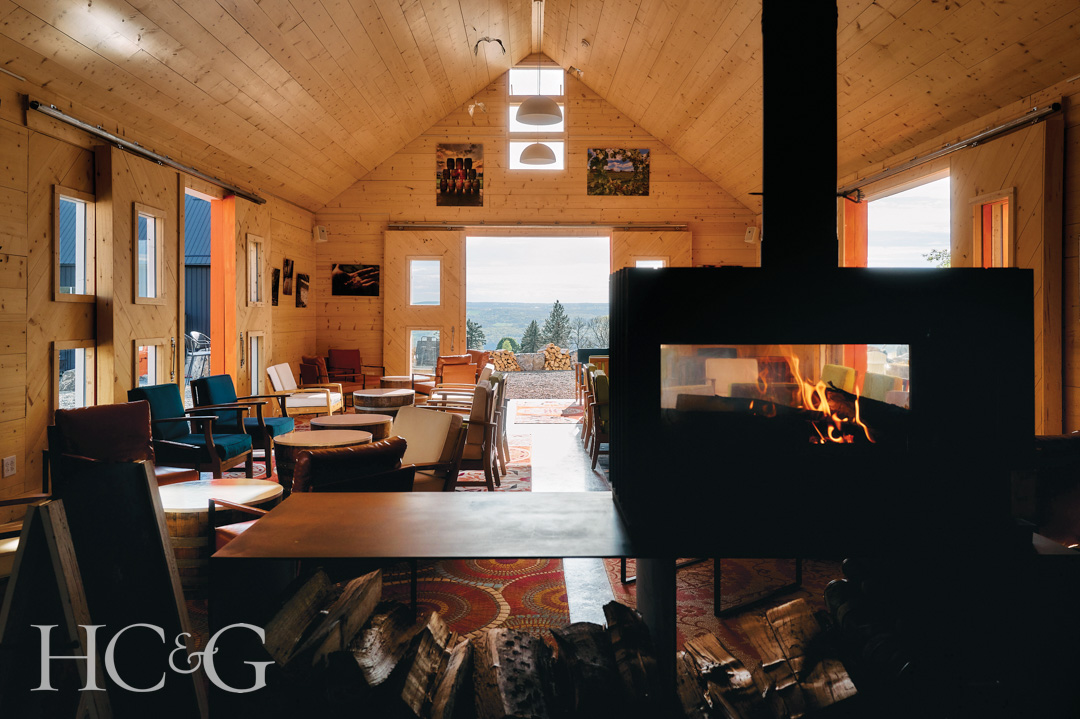
On my winery tour’s final stop, I moved from French savoir-faire to California know-how at Red Tail Ridge where winemaker Nancy Irelan is producing exciting cool-climate sparkling wines. She built a stunning, high-ceilinged tasting room amid a pollinator field of wildflowers on 50 acres overlooking Seneca Lake. There, general manager Kristin Evans poured me the winery’s most celebrated cuvée. “It’s made using the Solera method by adding the current vintage to one specific tank of reserve wines. We replenish the tank each year,” she said. Appropriately enough, it’s called Pérpetuelle Change Cuvée.
7 Wines From the Finger Lakes Region

Dr. Konstantin Frank Blanc de Blanc 2021 ($45)
From 100% Chardonnay, Dr. Konstantin Frank Blanc de Blanc 2021 has a fresh citrusy and toasty flavor and a creamy finish. Perfect with oysters.
Living Roots Bone Dry Riesling ($24)
Made in a wild ferment, Living Roots Bone Dry Riesling shows racy acidity with classic citrus, apricot and steely notes.
Boundary Breaks Riesling Dry #239 ($23)
Featured on Wine Spectator’s 100 top world wines, Boundary Breaks Riesling Dry #239 exudes white flowers, Meyer lemon and wet stone aromas.
Fox Run Gruner Veltliner ($25)
With grapes sourced from Dr. Frank’s original vines, Fox Run Gruner Veltliner is vibrant and expressive with grapefruit and apricot aromatics. Pairs with sausages and smoked salmon.

Red Tail Ridge Pérpetuelle Change Cuvée #5 ($33)
Made in the Solera method, Red Tail Ridge Pérpetuelle Change Cuvée #5 has delightful honey-suckle and orange aromas and finishes fresh with saline minerally and refined bubbles.
Hermann J. Wiemer Cabernet Franc Magdalena Vineyard 2023 ($45)
Hermann J. Wiemer Cabernet Franc Magdalena Vineyard 2023 shows black cherry and plum flavors with structure and bold tannins. Match with lamb chops.
Forge Cellars Tango Oak Pinot Noir 2023 ($38)
From a premier cru lieu-dit, Forge Cellars Tango Oak Pinot Noir 2023 “balances wildness and restraint, a sort of rugged elegance—like wild berries squeezed in a silken scarf,” in the winemaker’s words.
