


Like the many celebrities, such as Mick Jagger, Mia Farrow, and Yoko Ono, who have favored living in New York City’s iconic prewar buildings on Central Park West, the high-profile family who occupies this stunning apartment prizes the grand layouts, privacy, and spectacular direct park views that characterize the homes in these Gilded Age structures. And, as in the units of similar buildings like the Dakota, the Beresford, and the San Remo, other compelling attributes of this four-bedroom abode—especially for the lady of the house—were its well-preserved historic architectural details, which complement her refined approach to living while offering an Old World, European-inspired counterpoint to her collection of Asian art and artifacts. “She wanted a home that would match the way she likes to live, that would speak her language when she walked in,” says Christina Roughan, founder of Connecticut-based Roughan Interiors, who designed its uplifting interiors.
Completed in 1907 and designed by architects Clinton & Russell (who also designed the landmark Apthorp for William Waldorf Astor), the building itself reflects a stately French Second Empire style with its limestone facade, ornate wrought-iron gates, and striking mansard roof—all in tune with the European-inspired features of its epochal neighbors. Inside, dwellings containing sprawling rooms with high ceilings, intricate crown moldings, original oak paneling, and elegant fireplaces further underscore the building’s opulent origins. Yet, with Roughan’s influence, these features come to life anew amid fresh colors and shapes that allow its spaces to meet the current moment and mirror the essence of the people who live in them.
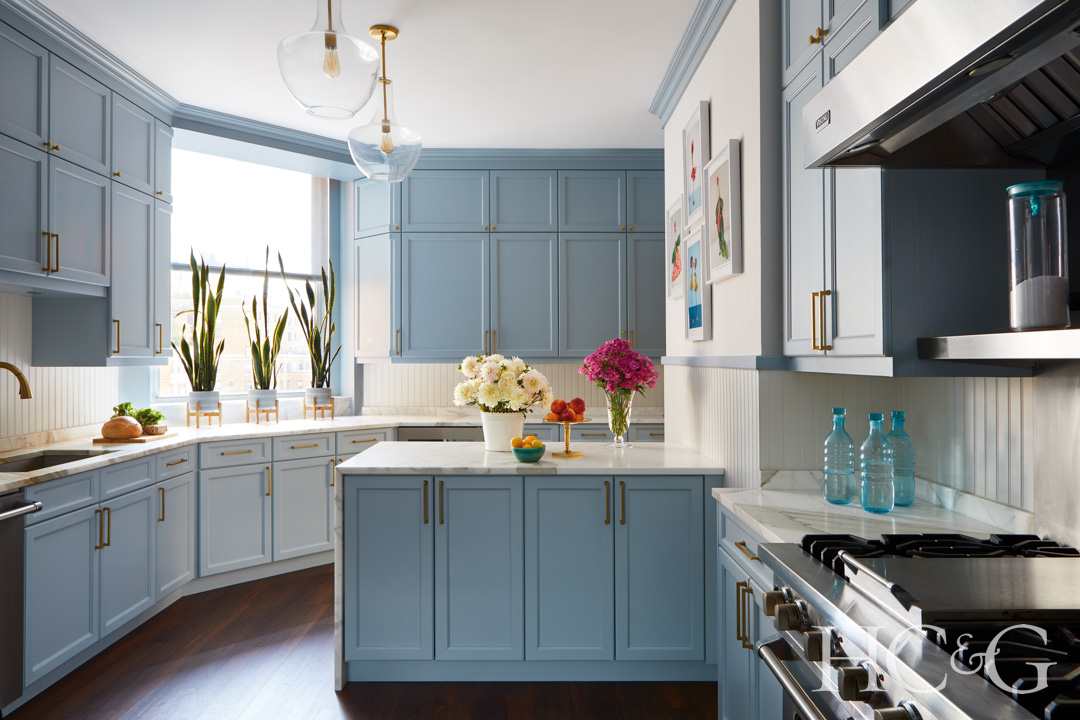


“The mother wanted all of the spaces to have a fun, happy spirit, but she also wanted an airy, calming home,” says Roughan, who deftly melded intonations of the family’s Asian heritage with an eclectic amalgam of furnishings that enliven its classic context. Inspired by some of the tones in her client’s collection of antique Chinese fans and one-of-a-kind pieces, such as a hand-painted screen now mounted as a work of art on a wall of the living room, a soothing palette of pale pinks, understated golds, and sky blues sets a sophisticated, subtly feminine tone throughout, thanks in part to wall coverings by Lori Weitzner (a mutual friend of both designer and client) in most every room.
Against the varied textures and soft tones of the elegant backdrops, Roughan’s unexpected mix of new, vintage, and antique furniture and accents fill each room with eye-catching form and relaxed function. A shapely Victorian table made of walnut, for example, anchors a pair of curvy contemporary sofas covered in a rosy mohair and silk velvet in the living room, while a handmade lotus-shaped pendant fixture made of brass, Murano glass, and gold leaf from Galerie Glustin in Paris adds a striking Asian-inspired note overhead and echoes the scattered floral medallions in a fireplace screen by contemporary metal artist Marie Suri. At one end of the family room, on the other hand, a mid-20th-century chair by Gio Ponti sets off a custom desk, while a comfy custom sectional and a 1960s Italian swivel chair add pragmatic style to the other. “My clients wanted the home to be a haven, a place that makes them feel alive when they come home,” says Roughan. “At the same time, every room was designed to be durable and lived in.”
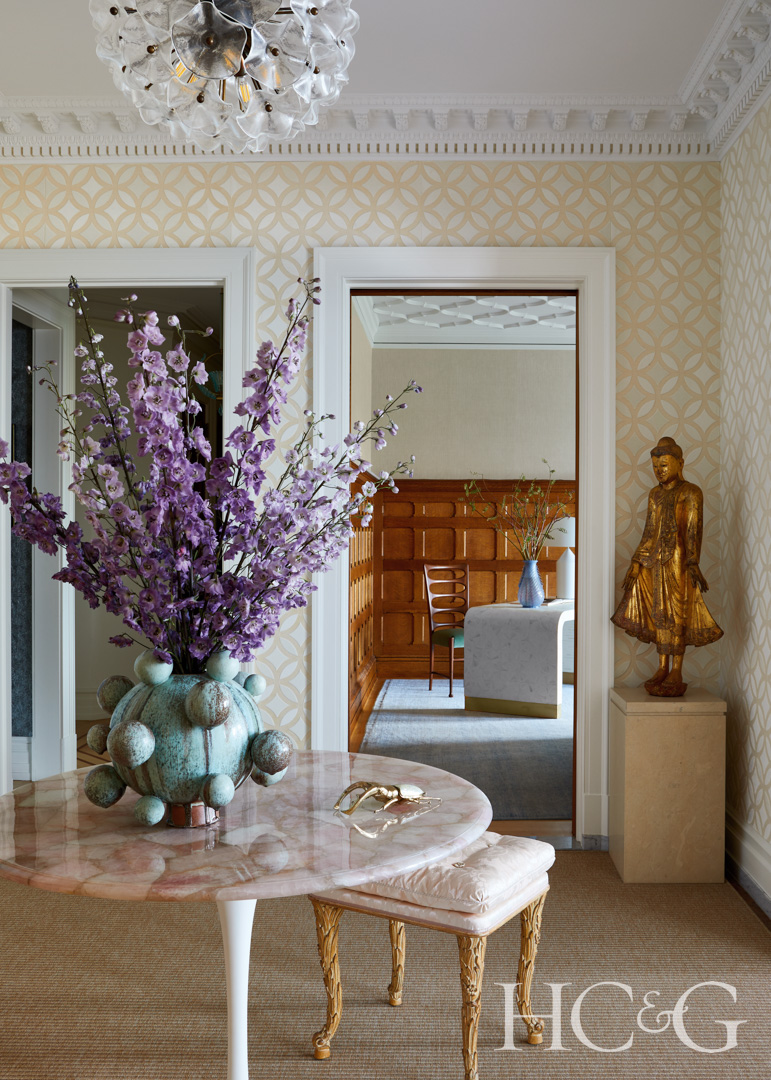
Notes of surprise—often in the form unique pairings, such as an Eero Saarinen Tulip table topped with rose quartz and surrounded by antique taboret stools with carved legs and tufted cushions in the entry, or offbeat accents, like the 1940s Italian glass-and-brass chandeliers in the dining room and primary bedroom—inject pops of playful energy throughout. “The family likes to entertain and also wanted guests to remember the home after they leave,” adds the designer. As it turns out, they always do.
