


It’s rare to have the chance to taste top Barolo. For this exciting experience, I accepted a wine dinner out of town. Held at Vintage 1891 Larchmont Wine Lounge—a new dramatically designed Westchester restaurant with oversized lamps, flowing drapery and a wine tower—the multi-course tasting dinner featured the legendary Michele Chiarlo wines from Piedmont. Known for their single-vineyard Barolos, Michele Chiarlo is the number one exporter of Piedmont premium brand wines to the US.

Alberto Chiarlo and his winemaker brother, Stephano, have taken over from their father, Michele. The winery saves 10 percent of its production annually for its library. Since 1991, when the Chiarlo family started the program, they’ve amassed more than 10,000 bottles of older vintage Barolo in their cellar library. Wine drinkers are thrilled by the opportunity to taste verticals and Michele Chiarlo is one of the few Barolo producers who sells old vintage verticals.
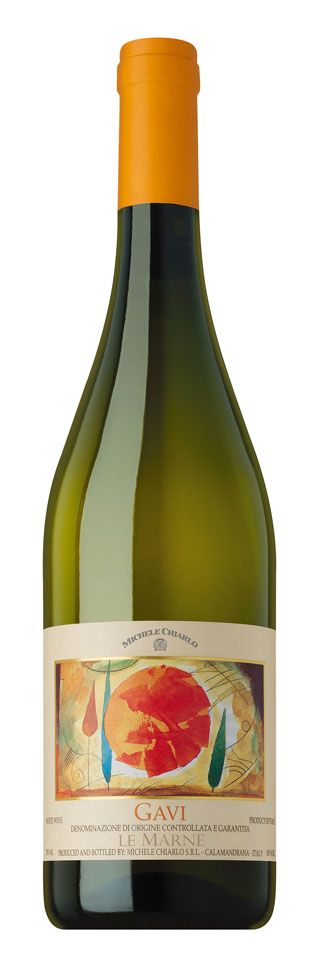
The dinner started off with Roero Arneis 2010, a classical white wine from the Piedmont region that is traditionally served with salumi, but tonight was presented with gnocchi and lobster. The second white was a fragrant Cortese Di Gavi 2010. Alberto reports that the Japanese are crazy about this Gavi because it matches perfectly with sushi and soy sauce. He often travels to Japan and hires one of the two Asian accredited Masters of Wine (as of this date) to explain to the audiences how Gavi accentuates the umami flavor.
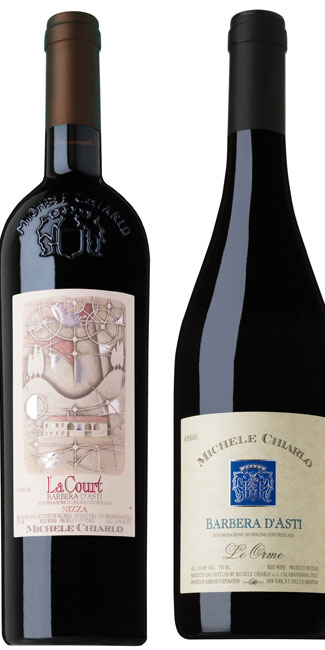
The braised guinea hen stuffed ravioli was paired with Barbera D’Asti Le Orne 2009 ($15), a 90-point Wine Spectator best buy. “Barbera is the true expression of Italy—food oriented and eclectic,” Alberto said. “And with its high acidity it’s even a good red for fish!”
These three introductory wines were merely preludes to the Barolo. “The Nebbiolo grape makes the Shakespeare of wine,” Alberto declared. “It’s sometimes difficult to taste because of its high tannins and brisk acidity. I think of it as atonal music. Once it has time to age, it’s brilliant.”
With fanfare, Alberto now brought on the big gun Barolos from two single vineyards: Barolo Tortoniano 2007, known for its spice and complexity, and Barolo Cannubi 2007 ($80+), a powerful masculine wine from the oldest Cannubi vineyard. The Chiarlo family owns 1.5 hectars of the Cannubi vineyard, making them the second largest owner (20 other producers share the 16 hectars of magic Cannubi soil). The vineyard is terraced at a 68- degree slope with one row per terrace for best sun exposure.

Alberto pointed out that his family also owns 60 percent of the Cerequio vineyard, considered the most feminine Barolo. Cerequio is sought after as the female counterpoint to Cannubi. (No Cerequio tonight. I guess this was a masculine theme dinner.)
Many top world wine regions have this feminine/masculine wine theory. The Left Bank of Bordeaux, where Cabernet Sauvignon reigns, is considered the masculine region and the Right Bank where the blend is heavily merlot-based is deemed the feminine seductive side of Bordeaux. (The exception is Cheval Blanc, which has 60 percent Cabernet Franc in the blend and is considered a powerful masculine Right Bank wine.)
I once interviewed one of the greatest makers of white burgundy, Anne-Claude Leflaive of Domaine Leflaive, who believes that her wines have a definite genre—masculine or feminine—and drinking certain wines can make you more attractive to the opposite sex.
“My Puligny-Montrachet premier crus—Les Folatières and Les Pucelles—are feminine whereas my Le Clavoillon and Les Combettes are definitely masculine,” Leflaive said. “So to balance your own nature, whether it is overly masculine or overly feminine, you drink the opposite wine and this will attract the opposite sex.” She described how when men drink Les Pucelles, they become irresistible to women.
Leflaive’s theory of how you might drink a masculine or feminine wine to complement your own male or female sides is shared by the great Rhône wine producing family E. Guigal in Côte-Rotie, where grapes coming from Côte Blonde vineyards show a feminine restraint and finesse and grapes from Côte Brune vineyards display a masculine, deeper, darker personality.

► No doubt the obsession with pairing food and wine never ceases. I’ve been to events where regal Champagne has been paired with lowly hotdogs. Bubbly with BBQ. Szechuan food with Sauternes. Pig with Pinot. So, it was no surprise that there was an event to pair take-out foods with fine wines.
At the expansive Manhattan office of Lot 18—a website that provides a “curated selection of high-quality wine and gourmet food products”—two in-house sommeliers demonstrated their pairing skills.

Janine Lettiere, a sommelier formerly at Le Bernadin, paired high-grade sashimi and hand rolls with Pommery Wintertime Champagne ($50). The round, creamy, toasty fruit-forward Pommery made from red grapes (Pinot Noir and Pinot Meunier) really worked with the raw fish and soy sauce. Since Champagne is grown in mineral soil and has a saline quality, the soy sauce matches it well.
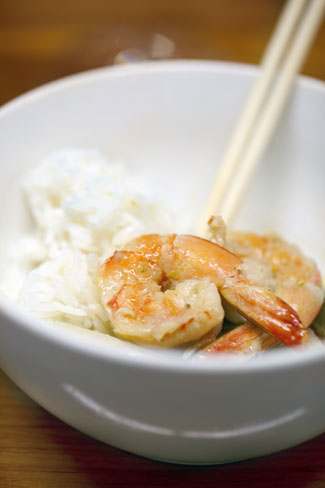
Next, Thai food: a shrimp curry with coconut milk and lime leaves. Sommelier Alexis Brock, previously at Gramercy Tavern, chose a 2007 Weingut Milz Laurentiush 180 Degrees Riesling ($18). With a lemony, greenish hue, this traditional Riesling from southwest Germany had just a little residual sugar. The spicy Thai food cut the sweetness and brought out the white grapefruit and peach flavors. Brock said 180 Degrees would also match nicely with a sausage or bacon dish, and even a tarte flambé.
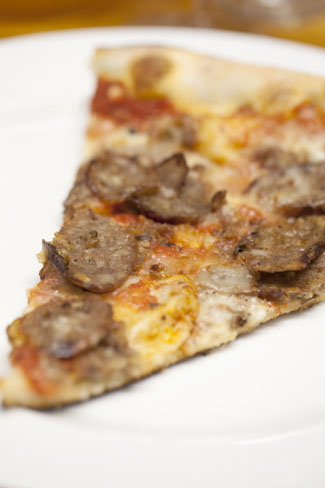
The standard of take-out food—pizza—got paired with a Barbera D’Asti from Quattro Leoini 2008 ($17). The wine’s natural high acidity is perfect for tomato sauce and rustic food. In fact, Barbera D’Asti is the ideal wine for all red-sauced Italian dishes. The final pairing was an Indian dish with 2009 Lucie Russian River Valley Pinot Noir ($30). With its black cherry and baking spice notes, the wine stood up to the full flavors of Indian food. www.lot18.com

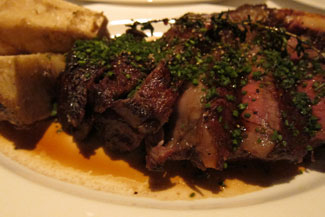
► My spoiled life continues with dining and wining on expensive wines—last week Barolos, this week, Napa Cabs. And what better pairing than a scrumptious steak with a beautiful big California Cabernet?

At the Monkey Bar I dined with Craig Becker, the talented winemaker from Somerston Wine Co. in Napa, who brought along his jewel in the crown, the Somerston Cabernet Sauvignon 2007 ($120). This cabernet was indescribably plush with mouth-filling texture and bright aromas and flavors of black fruit (plums, cassis, cherry, boysenberry) and cedar and mineral notes to its long finish.
Becker so lovingly described the beautiful Somerston property—with its 1,628-acres on two valleys with the highest elevation being 2,800-feet with sheep grazing along the slopes—that I was ready to just pack up and move there. Located eight miles east of Rutherford, Somerston is sustainably farmed with 200-acres under vine. The winery puts out three lines of wines including their flagship Somerston. Highflyer and Priest Ranch are the more affordable lines. For instance, Priest Ranch Cabernet Sauvignon 2009, also from selected vineyard blocks and aged in 40 percent new French oak, is a real Napa find at $40.

I don’t know if it was the wine, the food, the company or the glamour of the place—Monkey Bar is right now one of New York City’s most incendiary dining venues (on my last visit the cast of Downton Abbey took over half of the dining room), but the evening was a winner. The latest entry on my to-do list: visit Somerston’s winery in Napa.
