


Antiques have a way of weaving themselves into a garden, infusing it with character and a sense of history that feels both grounding and timeless. In my own garden, these pieces—some of them aged gracefully, others repurposed—do much to personalize the space. They’re not just ornaments or relics; they’re vessels of memory and meaning, anchoring the garden in a way that no new object can replicate. Every antique I’ve placed has a story, and each one adds depth to the narrative of the garden itself.

One of my favorite spots in the garden is the area off the covered porch. Here, a limestone trough has been transformed into a water feature. The trough’s rough, weathered exterior contrasts beautifully with the lush greenery that surrounds it, but it’s the sound of the water flowing over the stone that truly makes this spot magical. It creates a serene moment in the garden when the outside world melts away and the gentle trickling of water creates a sense of calm. From both the family room and the porch, you can hear it, and it’s become a beloved background soundtrack to many quiet evenings spent at home. In the drier months, the trough serves another purpose—it becomes a watering hole for the local birds. They perch on the rim, delicate and unaware of the world around them, sipping the cool water. I’ve found that the water feature, though a simple enough structure, provides the opportunity for meaningful connections to the creatures that visit.

By night, it transforms. I’ve installed a soft internal light within the trough, which casts a shimmering glow onto the large oak tree that stands above. The glow, reflected off the water, creates a hauntingly beautiful play of light and shadow. It keeps the garden feeling alive, even after the sun has gone down. The oak, an imposing figure during the day, becomes a graceful silhouette in the dark, its branches swaying gently in the breeze. There’s something about the interplay of light and shadow that feels like a secret only the night can reveal.
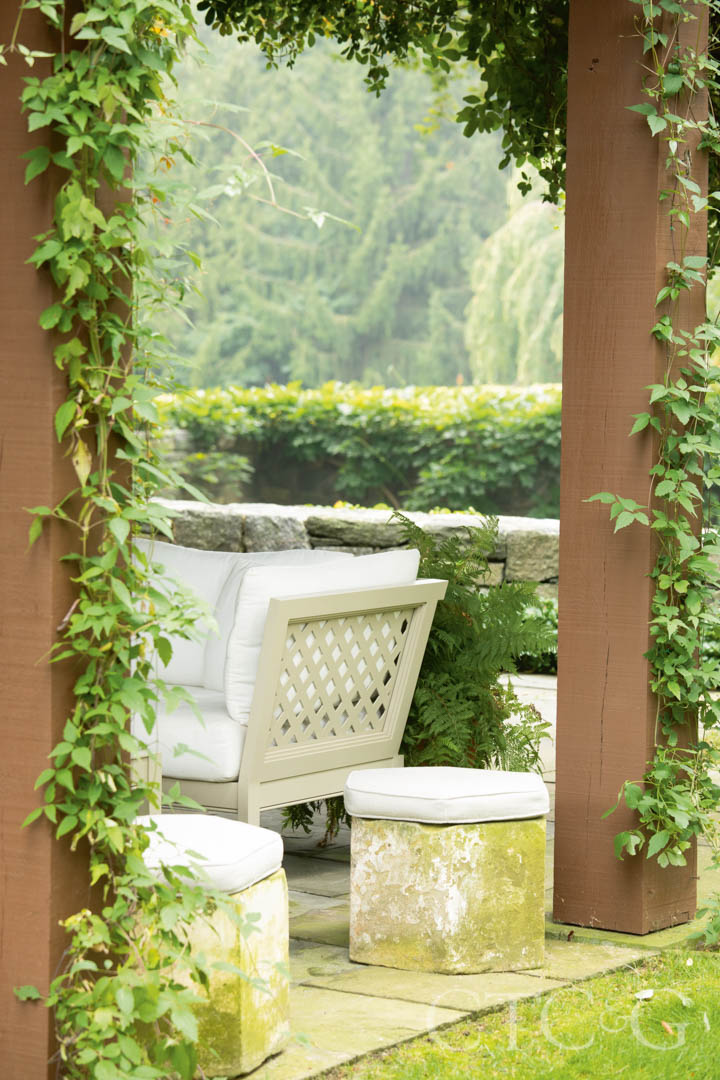
Antique stone plinths fitted with custom cushions create extra seating.
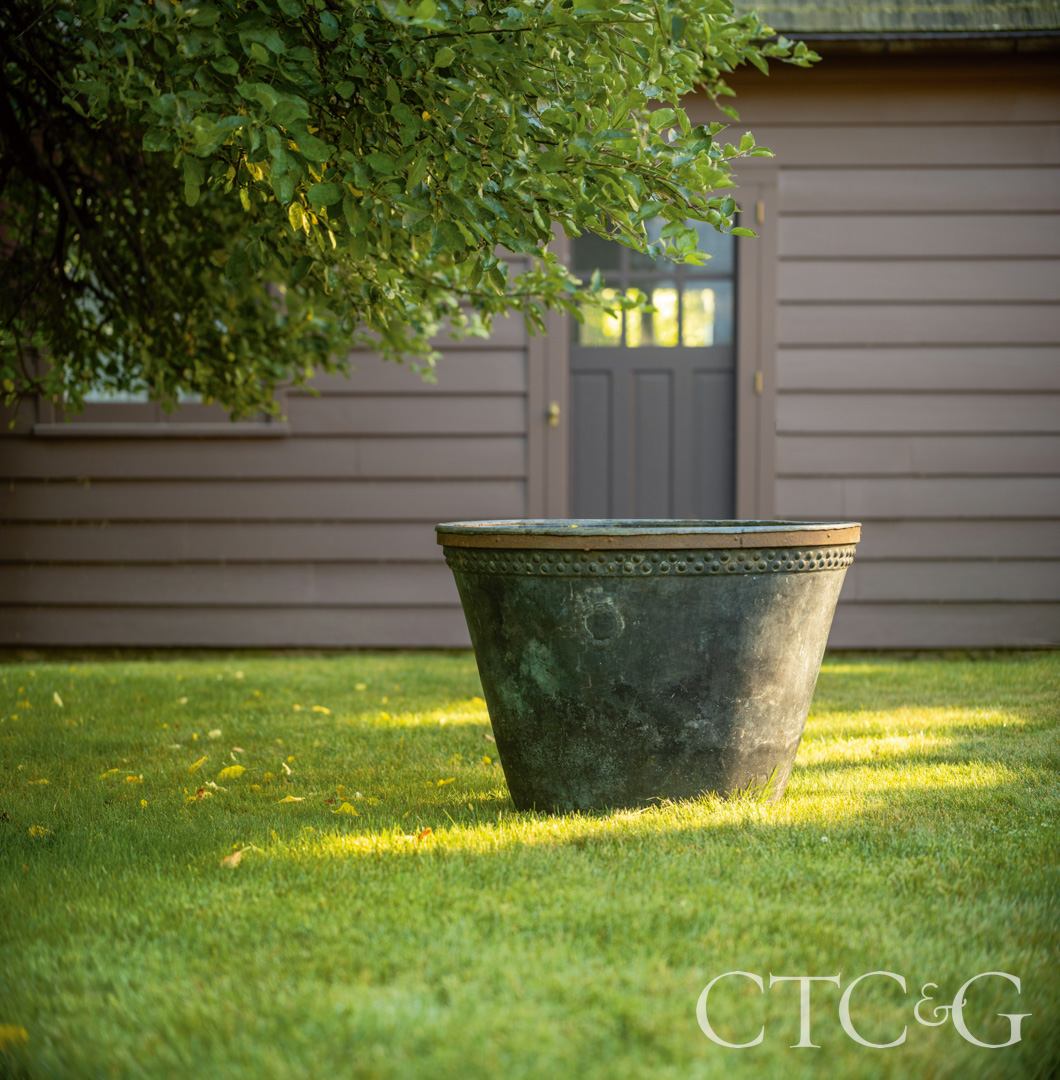
An antique copper pot is filled with still water to support wildlife and pollinators.

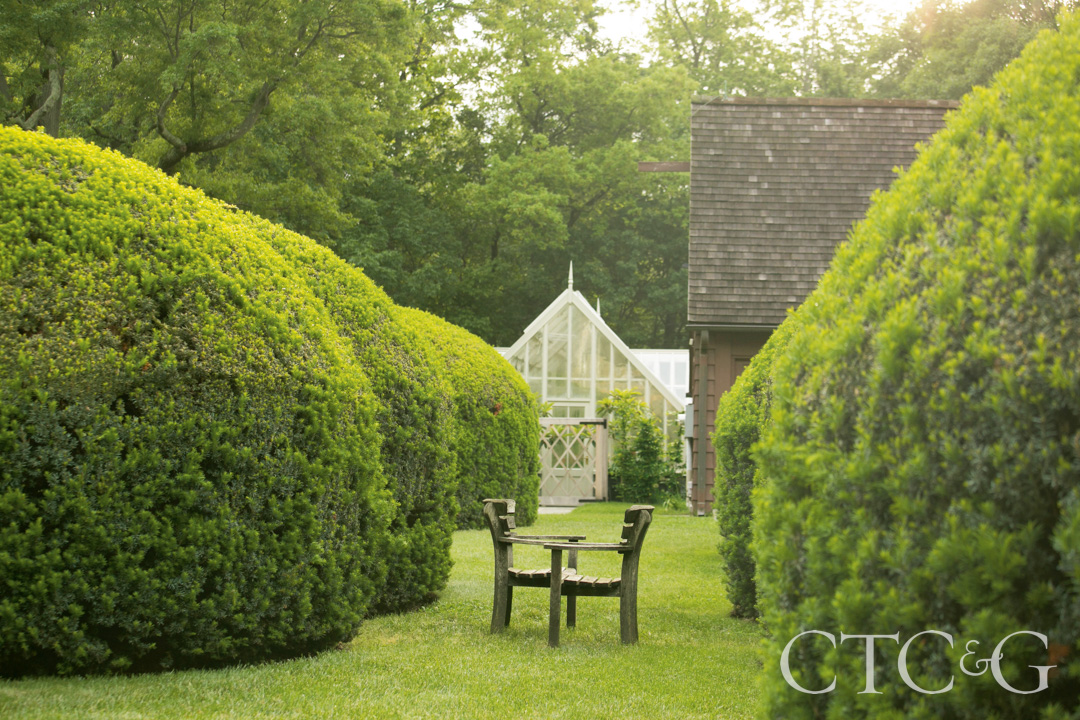
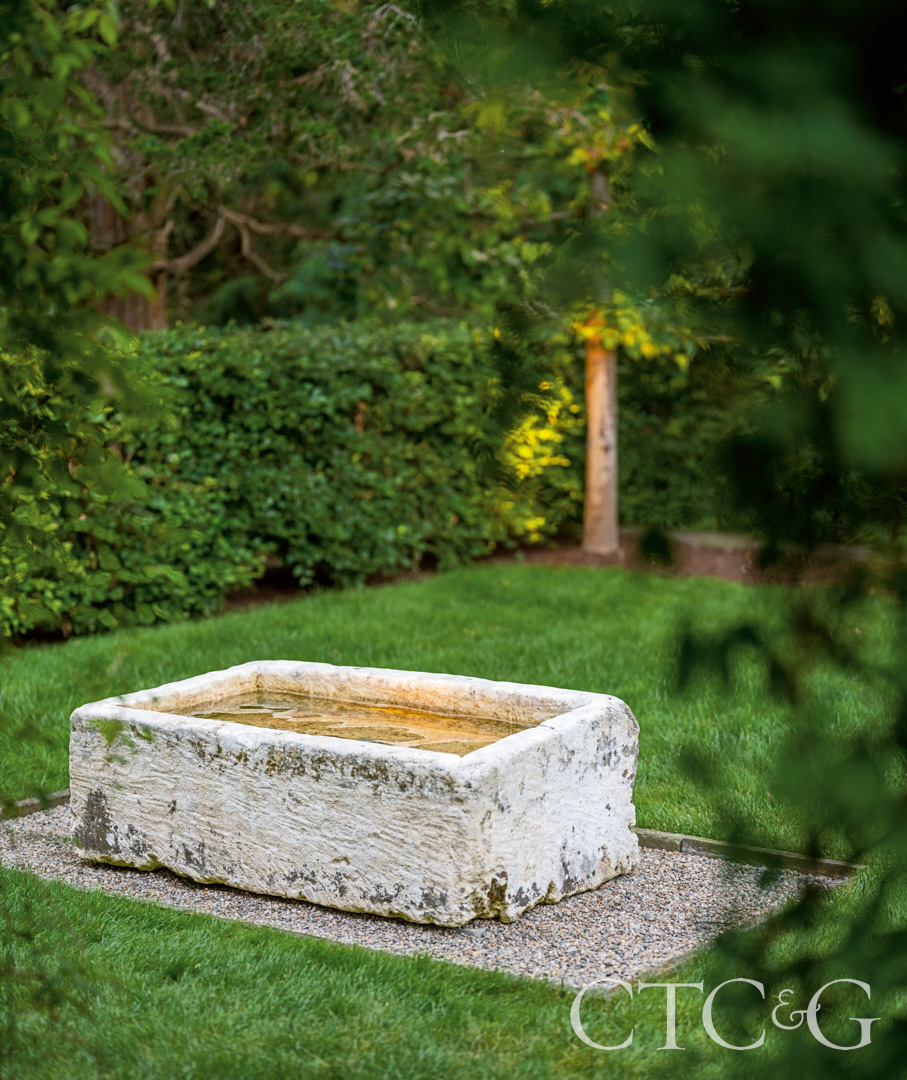
This antique limestone trough is set in a gravel bed surrounded by bluestone turned on edge. This area of the garden is bordered by European beech (Fagus sylvatica) hedging on three sides and given a backdrop of six tiered, espaliered linden trees (Tilia sp.)

A view to the covered porch through two of the matching custom gates that dot the property.
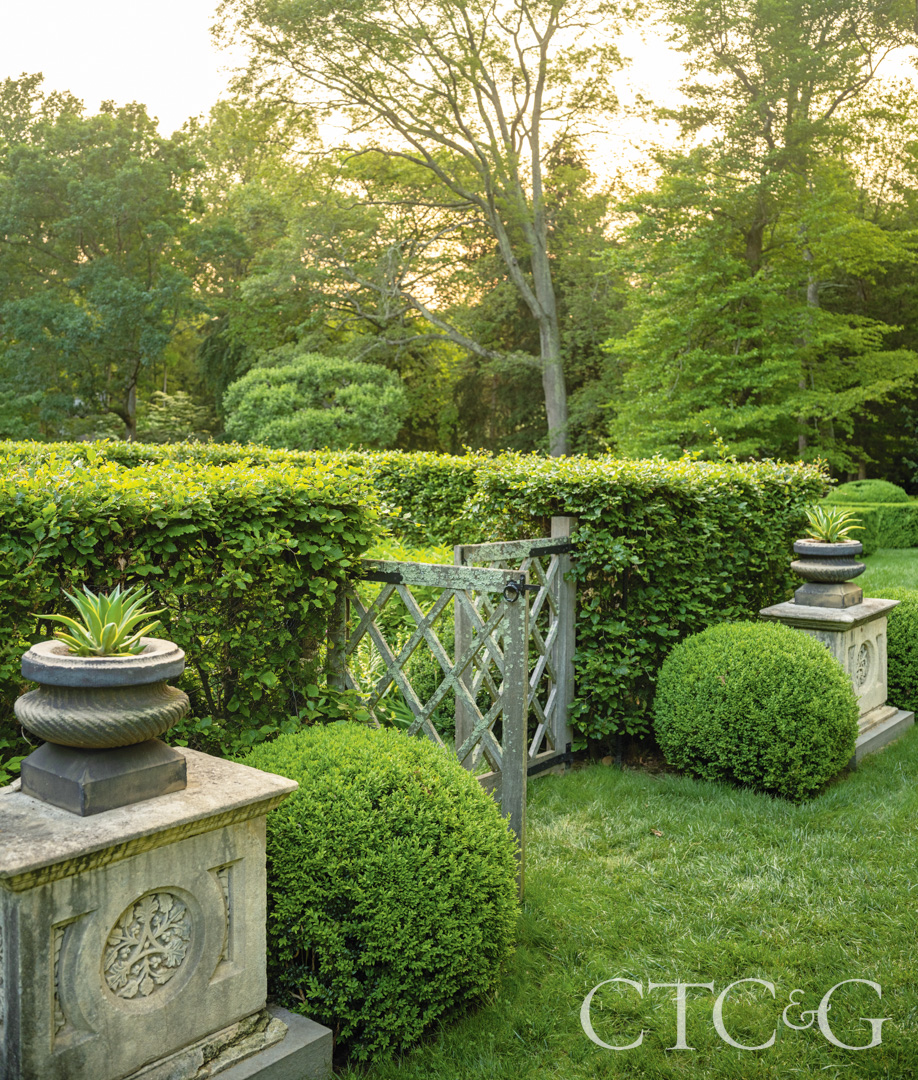
A matching pair of plinth bases purchased in England are set on four-inch thick bluestone to keep them raised above the ground in winter. Each year, once danger of frost has passed, I plant the urns with Agave americana.

The covered porch offers respite and a place to entertain.
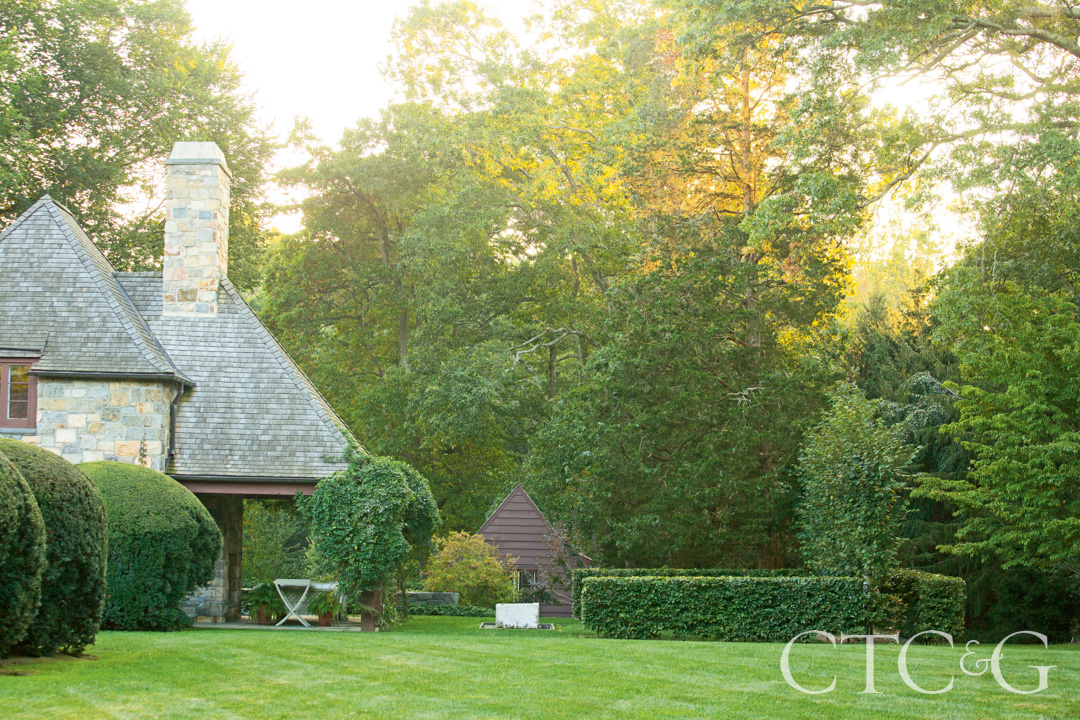
The antique trough sits on axis with the covered porch as well as on axis with the gamecock house.
Beyond the water feature, scattered throughout the garden, are other antiques that hold their own special place. Two hexagonal stone fragments from a forgotten monument now serve as stools on the covered porch. When I first found them, I wasn’t sure what they were meant to be, but their proportions were perfect, and they seemed to invite seating. With time, they’ve settled into the garden as if they’ve always belonged there, their edges softened by the years, the weight of history in their presence.

Outside the perennial garden, matching plinths stand tall, adorned with intricate carvings of holly leaves. I was thrilled when I came across these—they’re such a perfect embodiment of the seasons, and their level of craftsmanship is rarely found in today’s world of mass production. Atop these plinths, I placed two carved-stone planters, which are filled with agaves in the warmer months. The agaves’ spiky, architectural forms contrast with the softness of the holly carvings below them, and together they create a striking, almost sculptural pairing. There’s something about the juxtaposition of the organic and the crafted that makes these pieces so interesting, and in the changing seasons, they offer a reminder of the beauty of both permanence and transformation.

When I walk through the garden, I’m reminded of how these objects carry the weight of time with them. They are a celebration of craftsmanship, of attention to detail, and of a love for beauty that transcends generations. And though the plants may change with the seasons, the antiques remain constant, creating a timeless backdrop for the ever-evolving garden. In many ways, they make the garden feel more personal—each piece a reflection of my tastes, my travels, and the moments that have shaped my life.
Antiques, with their weathered surfaces and storied pasts, bring a depth to the garden that can’t be achieved with new things. They offer a sense of place, a feeling of rootedness, and a quiet invitation to reflect on the beauty of both the past and the present. As the years go by, these pieces will continue to tell their stories, grounding the garden in the richness of history even while it grows and changes with each passing season.

