


Native Norwegians Christin Engh and her husband, Svein, have been living in the U.S. for more than 30 years, but when two of their three daughters moved back to Norway, the couple wanted a more permanent place to stay during visits. Engh, the founder and principal of her eponymous Greenwich firm, Christin Engh Design, craved a space with all the makings of a quintessential Oslo apartment. “I knew I wanted one of those really old buildings with super-high ceilings and ornate moldings typical in late-1800s apartments,” Engh explains. She also had her sights set on a kakkelovn—a freestanding tile, wood burning stove often found in the region’s historic buildings.

There was just one problem. Covid travel restrictions left the job of apartment hunting to Engh’s daughters, who sent videos and gave FaceTime tours. “When they came to this apartment, they said, ‘You will love it,’” the designer remembers, and they purchased it sight unseen. “Based on the floor plan and what we saw on FaceTime, I knew we could make it into something really nice. The layout was perfect, and we didn’t have to change the kitchen. We could keep the bathroom in the same place.”
“I knew I wanted one of those really old buildings with super-high ceilings and ornate moldings typical in late-1800s apartments.”
– Christin engh
With the basic frame intact, Engh set out to completely gut and update the apartment. Travel was still difficult, so the designer placed a lot of trust in her builder in Norway, Malerfirmaet Per Vernvik AS. “It’s not easy sitting in Connecticut, trying to pick out paint colors on the wall via FaceTime,” she laughs. Engh was also unfamiliar with the design world in Norway, so she was tasked with finding sources and materials abroad.

“I had a vision the entire time, but it was just finding it,” she says. That vision? A layered, less-is-more aesthetic that prioritized comfort. “This is up north. We had -30 degrees Celsius [-22 Fahrenheit] last weekend. I just wanted to keep it really cozy,” the designer explains, noting that her style is different from the traditional Scandinavian minimalism popular in the region.
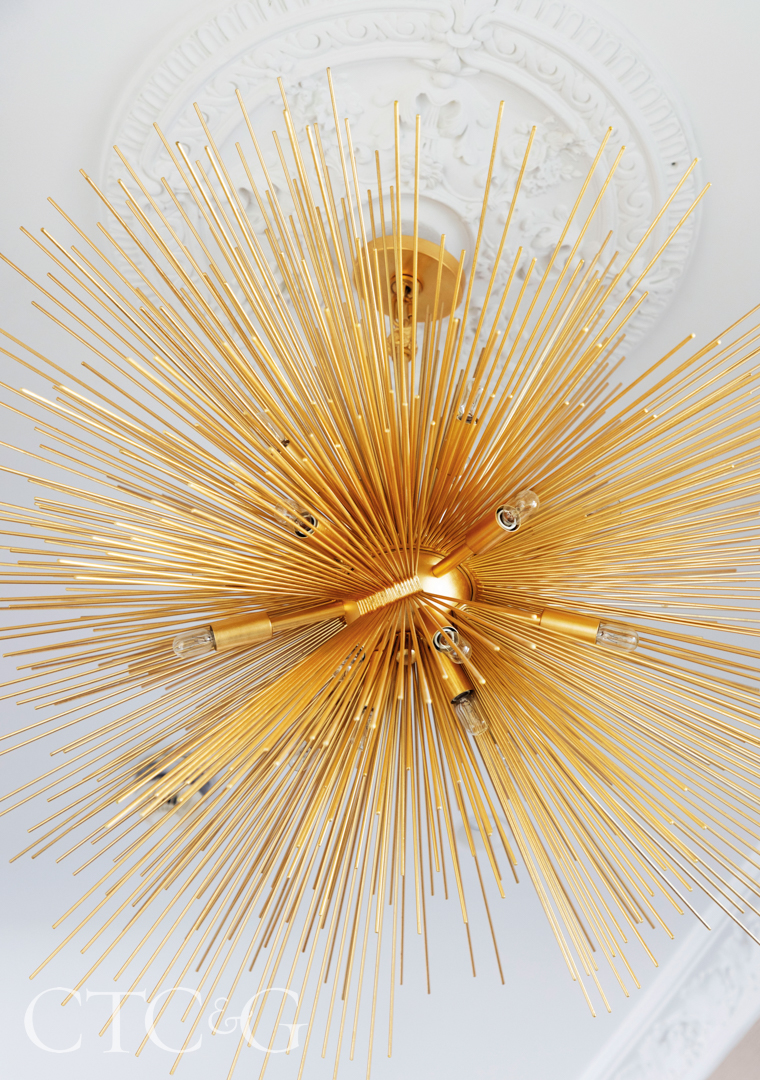
Visual Comfort sunburst chandelier offers a warm welcome in the entryway.

Designer Christin Engh stands in her kitchen.
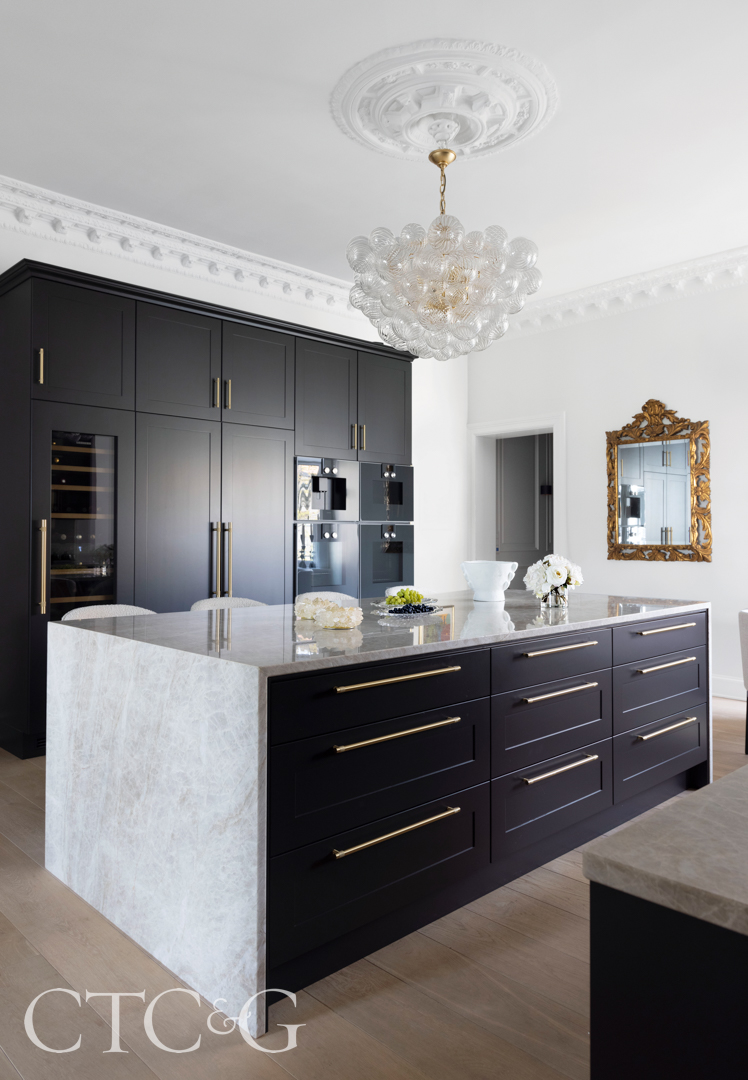
In the kitchen, Engh enlisted Jan Petter Torp to create custom cabinets with hardware from Canaan Distributors; the chandelier is Visual Comfort; appliances are Gaggenau; and the mirror is from the Antique and Artisan Gallery.
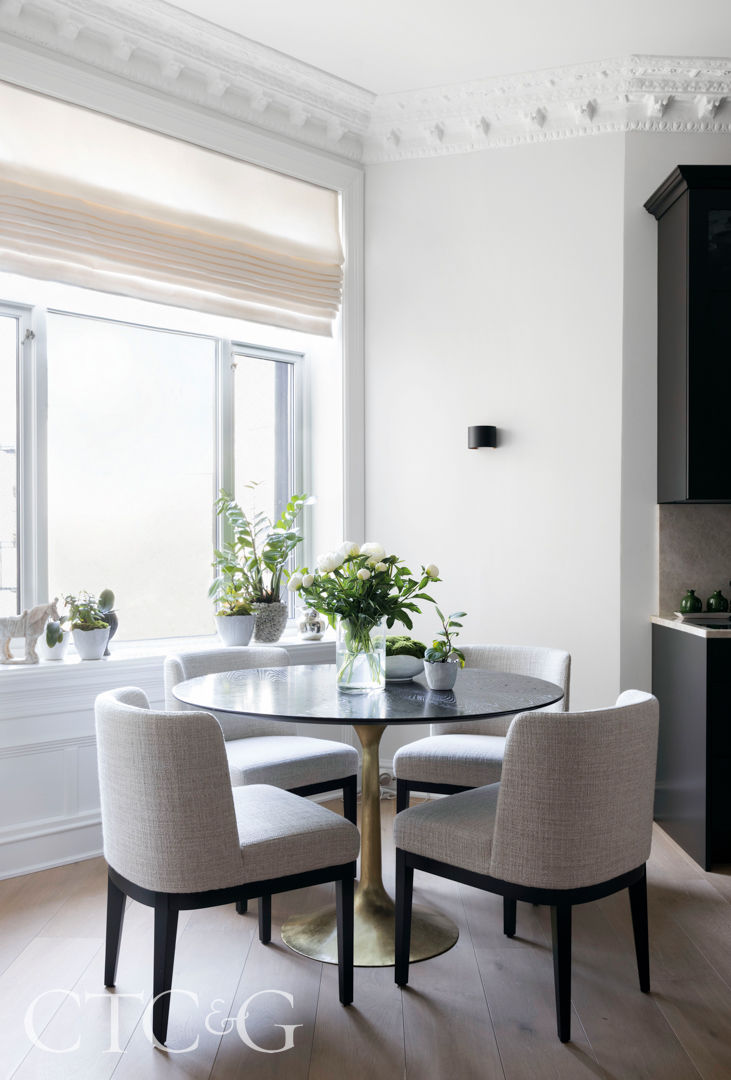
The dining nook features a Julian Chichester table with Slettvoll chairs.
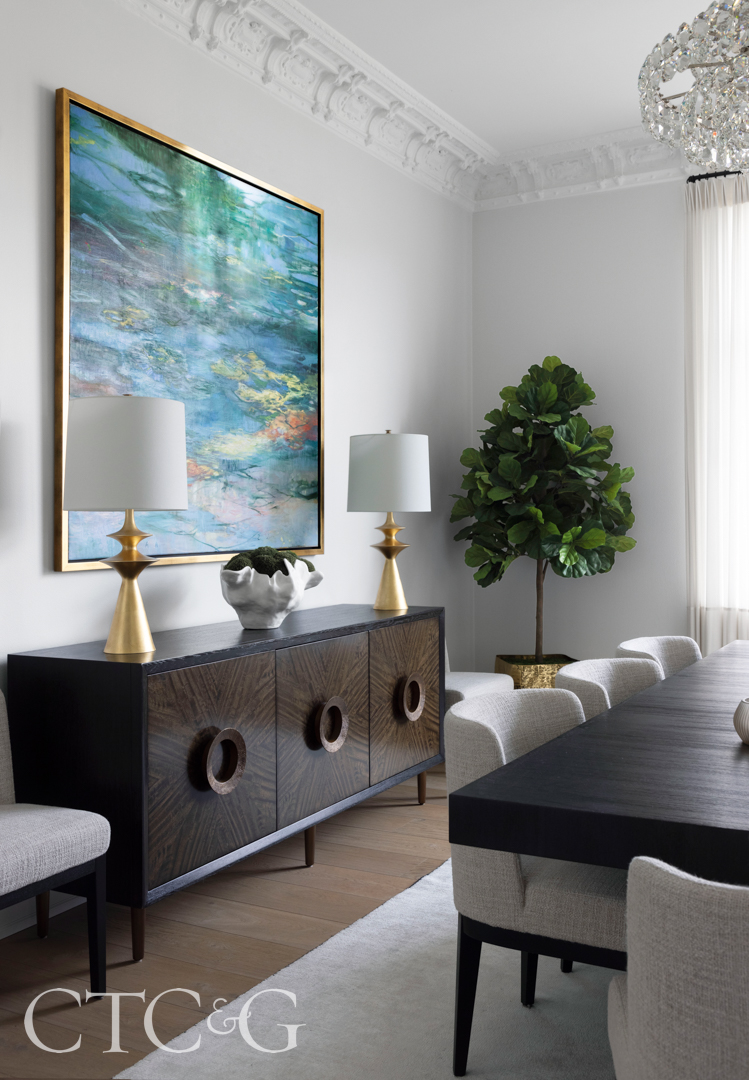
A painting by Bjørnar Aaslund makes a statement in the dining room, along with Visual Comfort lamps atop an Arteriors credenza; the dining table is from Palecek.
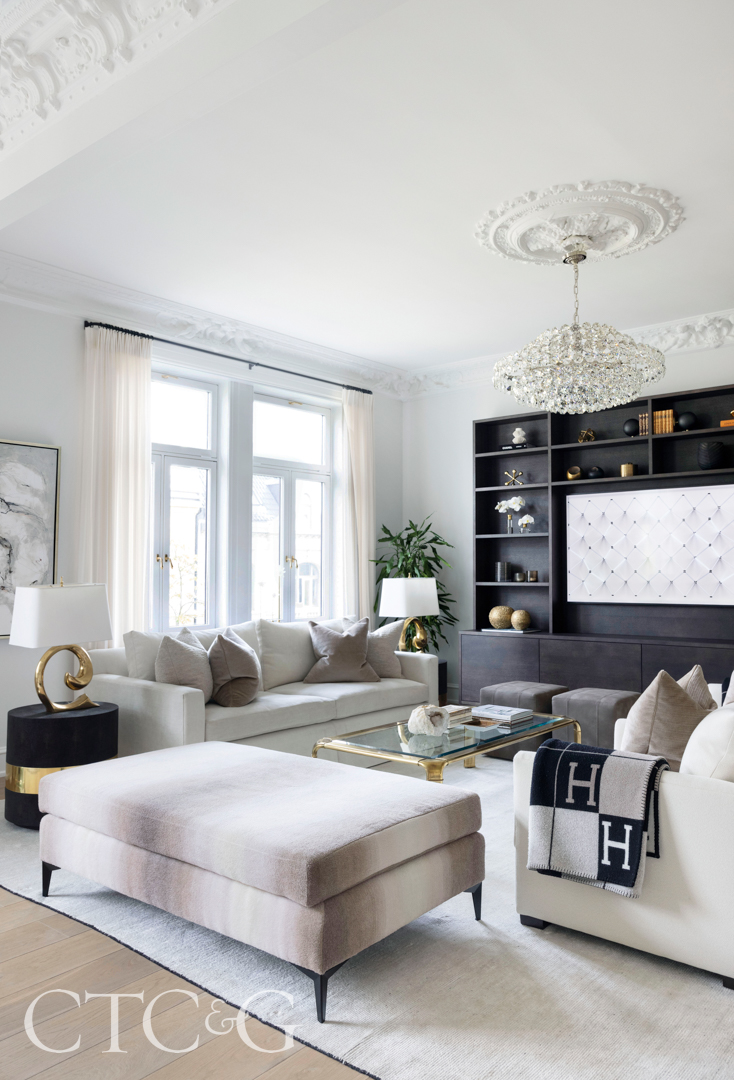
In the living room, Holly Hunt fabric tops a large ottoman and sofa, complemented by Fabricut pillows; black side tables are from Made Goods.

Items on the coffee table include a bone box from Bungalow and small gold tray from Trovare Home.
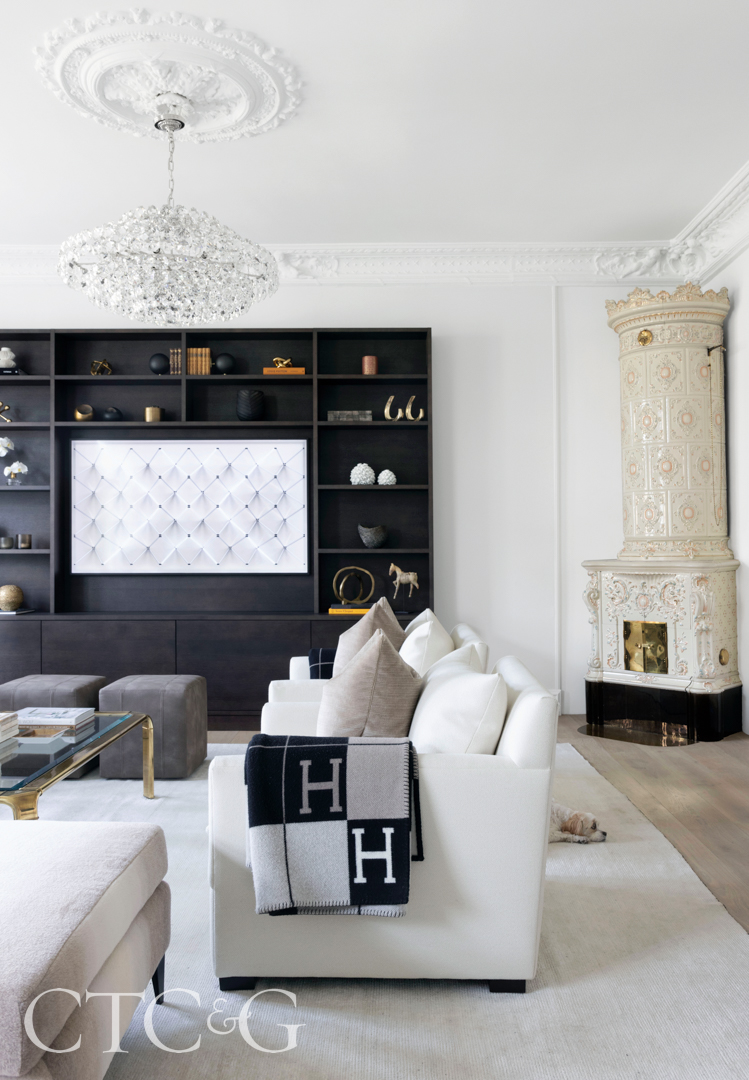
A kakkelovn—a traditional wood-burning stove in Norway—adds visual and literal warmth to the space.
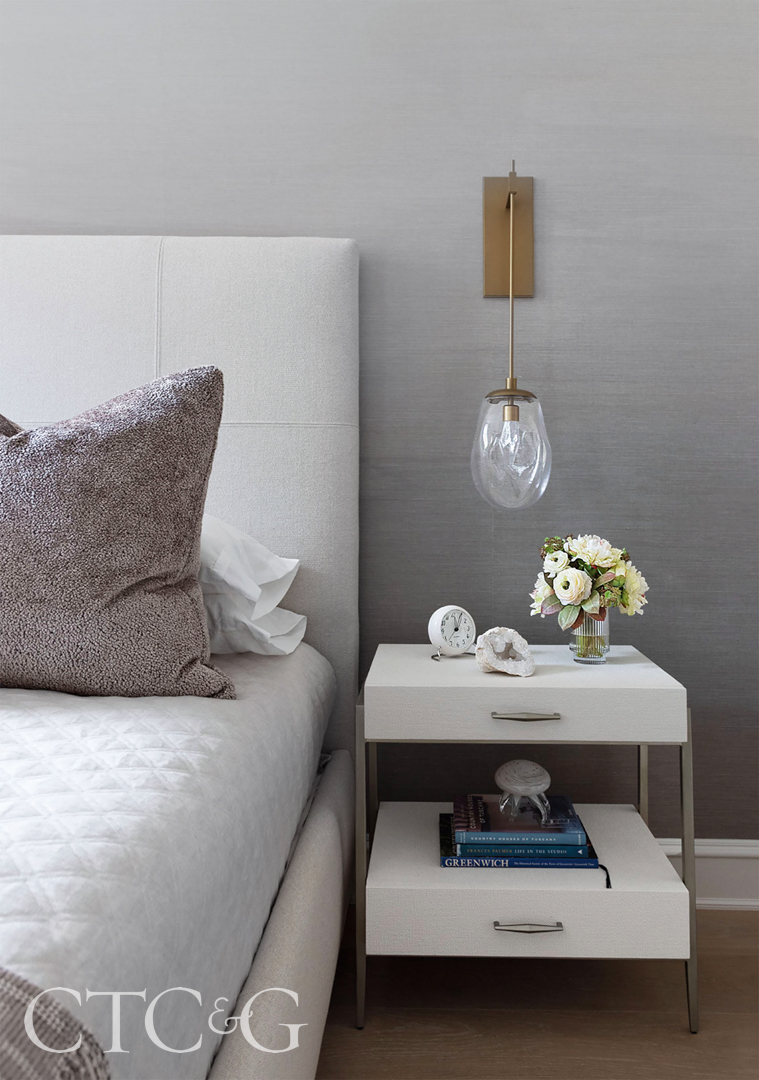
In the primary bedroom, a Hammerton sconce illuminates a bedside table from Interlude.
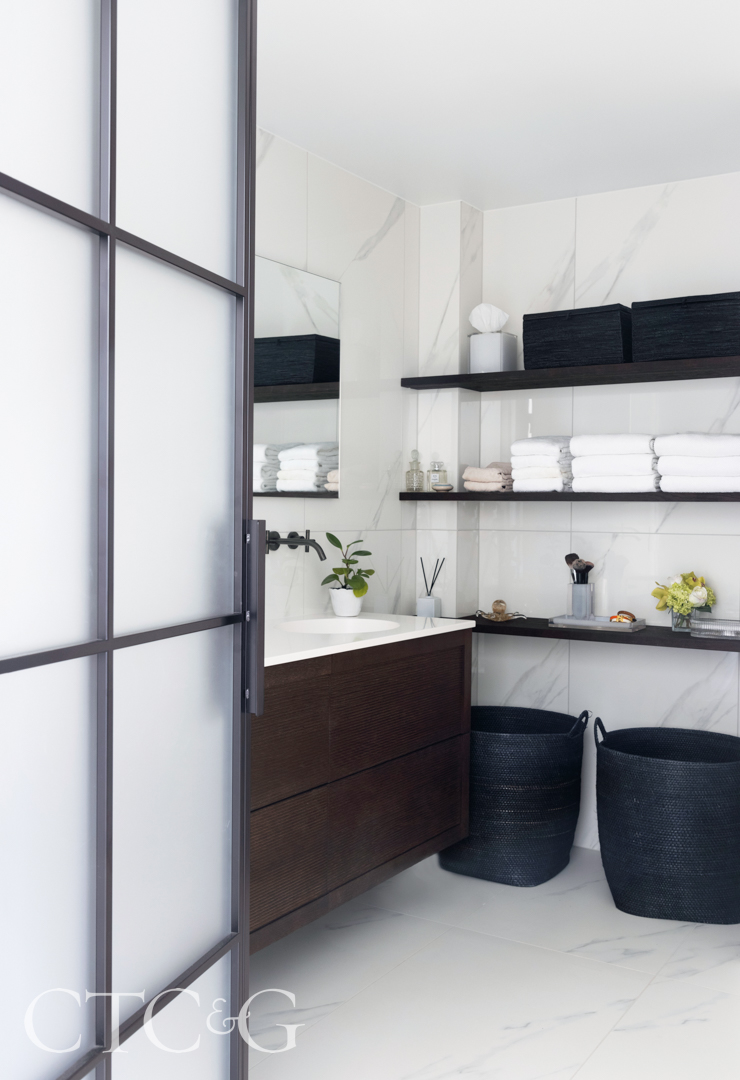
In the primary bathroom, flowers from Diane James Home and large Crate & Barrel baskets add comforts of home.
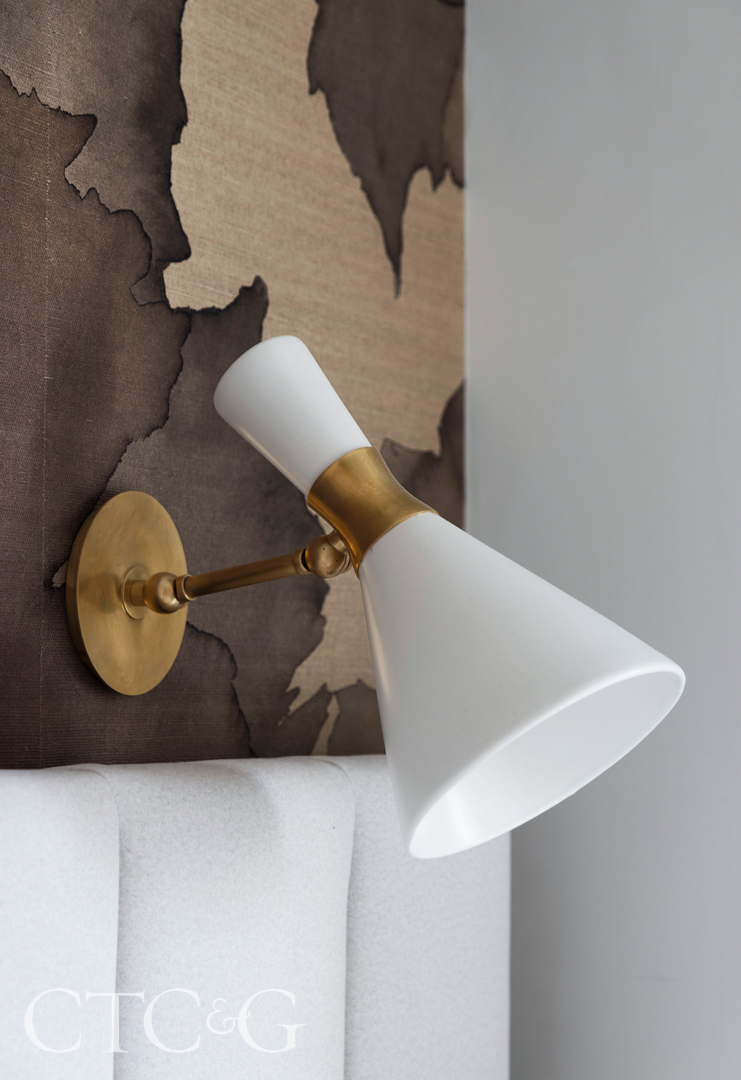
In the guest bedroom, Visual Comfort sconces pop against Phillip Jeffries wallpaper.
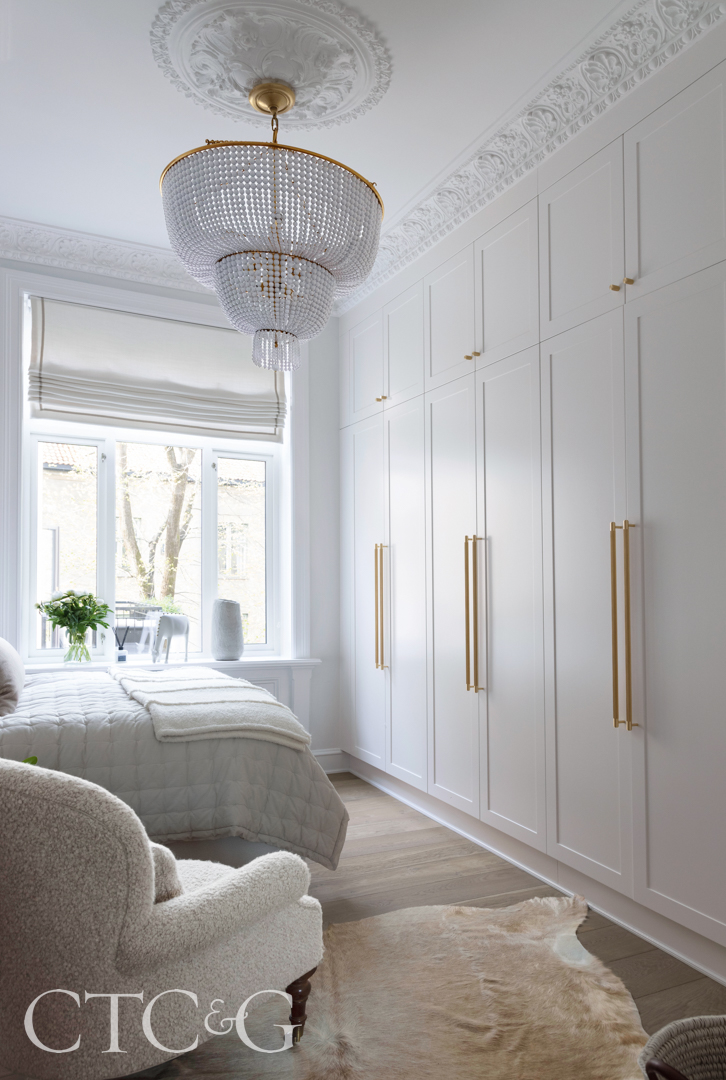
A roman shade in Kravet fabric and a Rosemary Hallgarten throw add textural notes.
Engh’s designs focus on texture, so that played nicely into the warm, cozy vibe she wanted to create. All the while, she kept an eye toward the building’s original architecture and the needs of a cold climate. Original plaster molding and paneled millwork sings throughout, and the designer minimized the high ceilings with pops of wallpaper. She put a lot of trust into her builder to get the job done, though she flew back admittedly, “too often.” During visits, the designer would spend several days in back-to-back meetings with Vernvik, sourcing and planning.

One priority was to open up the dining room and living room into one larger space. “We had 23 people around the table for my daughter’s birthday recently. You can sit at the dining table having a conversation, some can move to the living room, and we’re all together hanging out,” Engh says. A commissioned artwork in the dining area gives the eye a place to rest, while in the adjoining living space, the kakkelovn is the star of the show. “Light the fire in there, and it’s amazing: It gives off so much warmth,” she notes, while a vintage midcentury coffee table lends a formal element. “It’s elevated but cozy.”

Elevated but cozy was the ticket throughout, like in the guest room, where Phillip Jeffries wallpaper and a custom bed add textural layers. Most of the lighting throughout is sourced from Visual Comfort, a “no brainer,” thanks to its London location, Engh says. She turned to Darien’s Louie Custom Drapery to create the apartment’s window treatments. “I picked heavy, chunky fabric to make it cozy,” the designer says, noting that along with aesthetics, heavy drapes are important to retain heat. “In conjunction with making it cozy, the drapes keep warmth inside in the winter and light out in the summer.”
