


HC&G: What originally lured you Out East, and how did you land in Sag Harbor specifically?
Analisse Taft-Gersten: My husband, James, and I were always drawn to Sag Harbor. Long before we moved here, we would take the ferry from the North Fork where we had a home to the South Fork to have lunch and fantasized that if we ever lived in the Hamptons, this would be the only place we would love to live. I grew up in Laguna Beach, and Sag Harbor evokes some of the same qualities I loved there—the light, the water, and the sense of a small but vibrant creative community. Combined with its rich history and village character, it felt like somewhere we could truly put down roots.

The house is so charming and authentic. How did you approach its design and decoration when you first discovered it?
The house had actually been featured before, but at that point it had undergone a much lighter renovation. It was primarily a weekend retreat and occasional rental, so our approach was very different. When we decided to make it our full-time home, we undertook a complete renovation. The challenge was that the house is quite modest in scale, so every decision mattered. James and I are both drawn to the simplicity of Swedish cottages, and we wanted the interiors to feel calm, light, and understated. We pulled the palette back, embraced a more monochromatic approach, and focused on creating a sense of cohesion throughout. In many ways, we approached the renovation like designing a boat. Every inch had to work hard, every corner needed a purpose, and every detail had to be thoughtfully considered. The goal wasn’t to make the house feel bigger—it was to make it feel beautifully resolved.
How has it evolved since you purchased it?
The biggest evolution has been less about renovation and more about refinement. Living in a home over time teaches you what you truly need, what can be pulled back, and where you want to invest more attention. In recent years, we’ve focused heavily on the landscape and on continuing to refine our collections of art, furniture, and objects. Through my showroom, The 1818 Collective, I’m constantly being introduced to talented artisans, makers, and artists, and many of those discoveries naturally find their way into our home. What I love most is that the house continues to evolve with us. It’s become more personal, more layered, and more reflective of how we actually live. James and I often find ourselves sitting at the dinner table with a glass of wine and asking, “Are we going to live here forever?” That’s probably the greatest compliment we can give it—it simply feels right.

Luxury is defined differently in this home—it has the same level of detail as grander homes in the area, but there’s a lot of restraint as well, which makes it quite unique.
I’ve never equated luxury with size. To me, luxury is about thoughtful design, exceptional craftsmanship, and creating a home that supports the way you want to live. One of the advantages of a smaller home is that it forces you to be incredibly intentional. You don’t have room for everything, so you’re surrounded only by the pieces you truly love. Every furnishing, every object, and every detail has to earn its place. The design has to work harder, be smarter, and serve multiple purposes. Because of its scale, comfort was just as important as beauty. James, who comes from a hospitality background, was especially focused on how the house would function for entertaining. We love having people over, whether it’s houseguests for the weekend, our children and their friends, a dinner party, or cocktails in the backyard. The house was designed to adapt to all of those moments while still feeling intimate and comfortable for just the two of us. To me, that’s a luxury in itself, a home that feels equally right whether it’s full of people or completely quiet.

A custom banquette is upholstered in a fabric from HBF Textiles and surrounds a vintage oak table in the dining area.
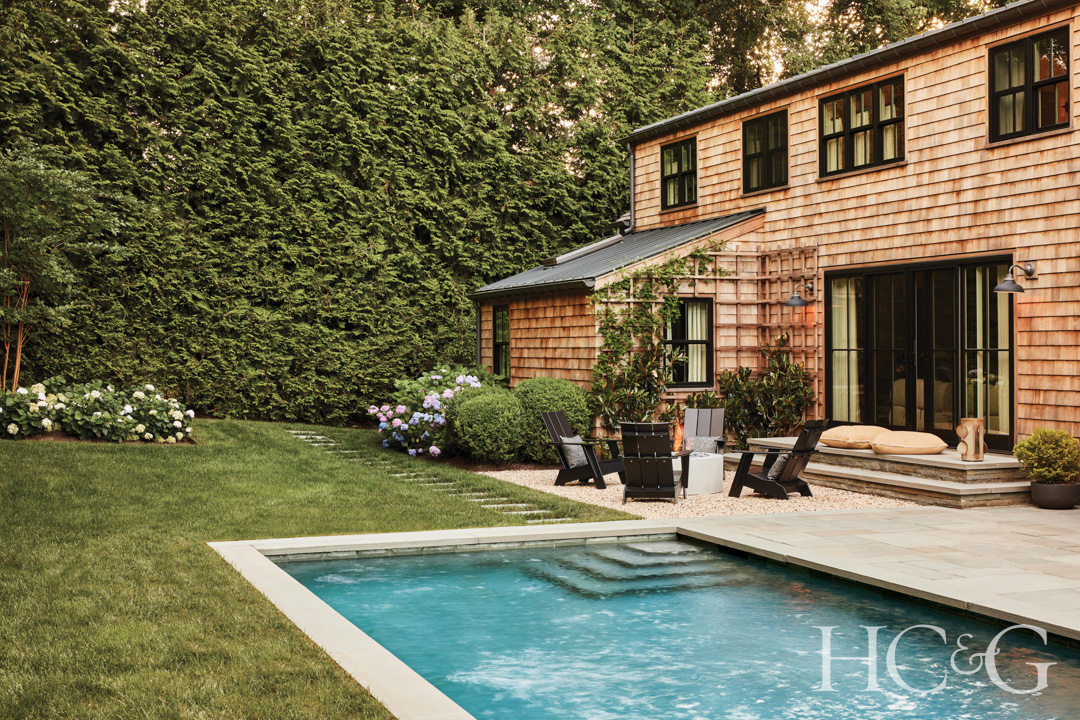
Adirondack chairs from Design Within Reach are placed beside the pool area.
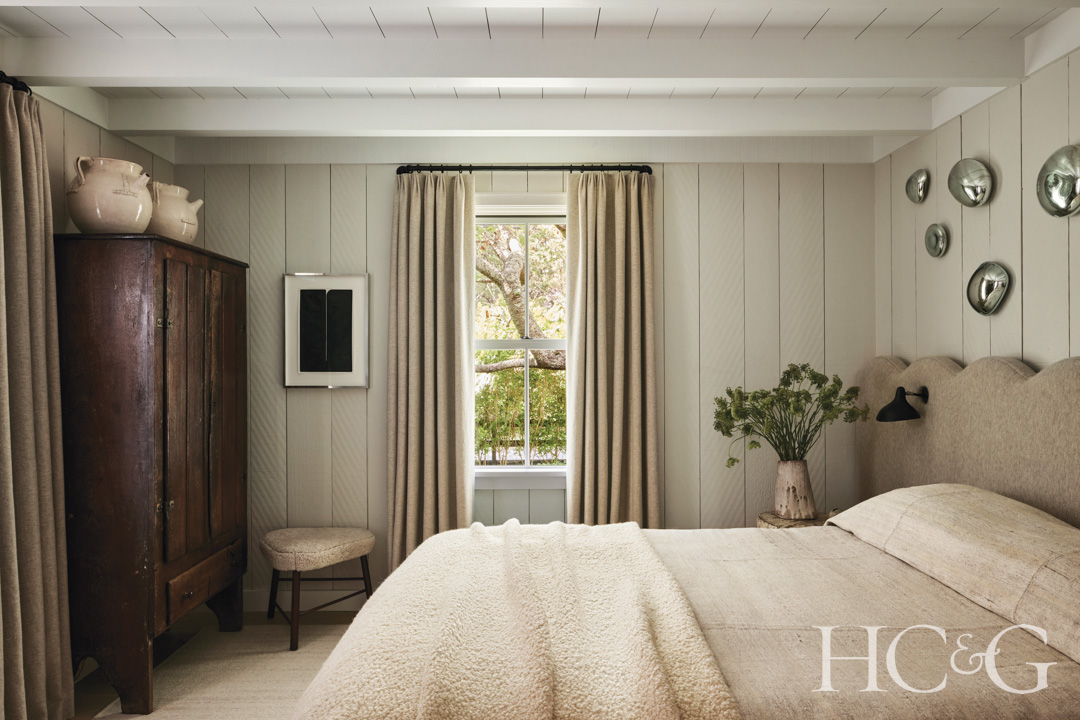
The guest bedroom features a vintage armoire.

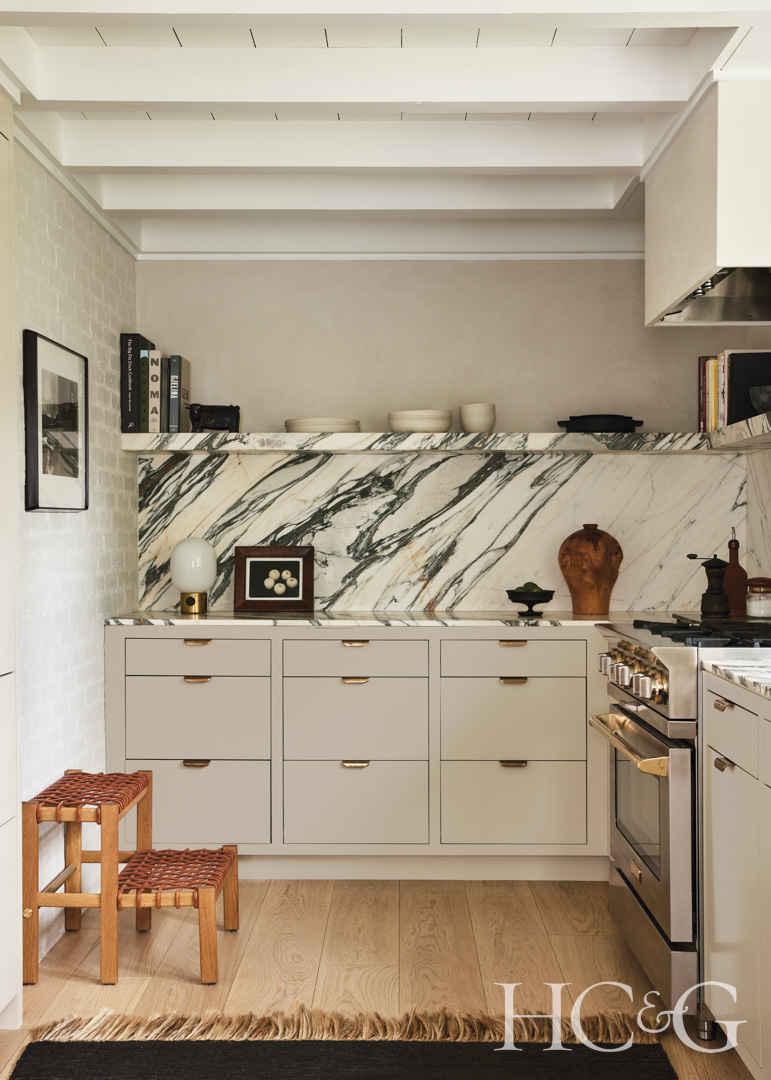
In the kitchen, the cabinetry is custom by Coastal Cabinet Works and painted in the shade Silver Satin by Benjamin Moore.
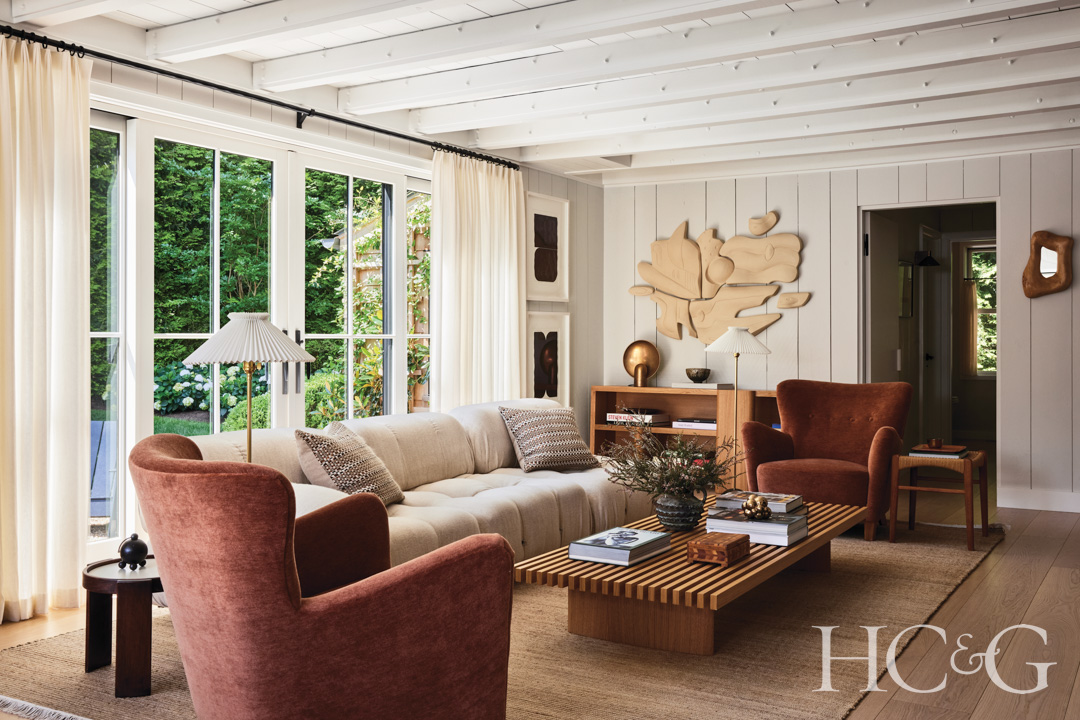
Vintage Fritz Hansen armchairs covered in a fabric from The 1818 Collective flank a coffee table from Monc XIII in the living room.

In the office, a sofa is covered in a fabric from ALT For Living, and the desk is from Egg Collective.
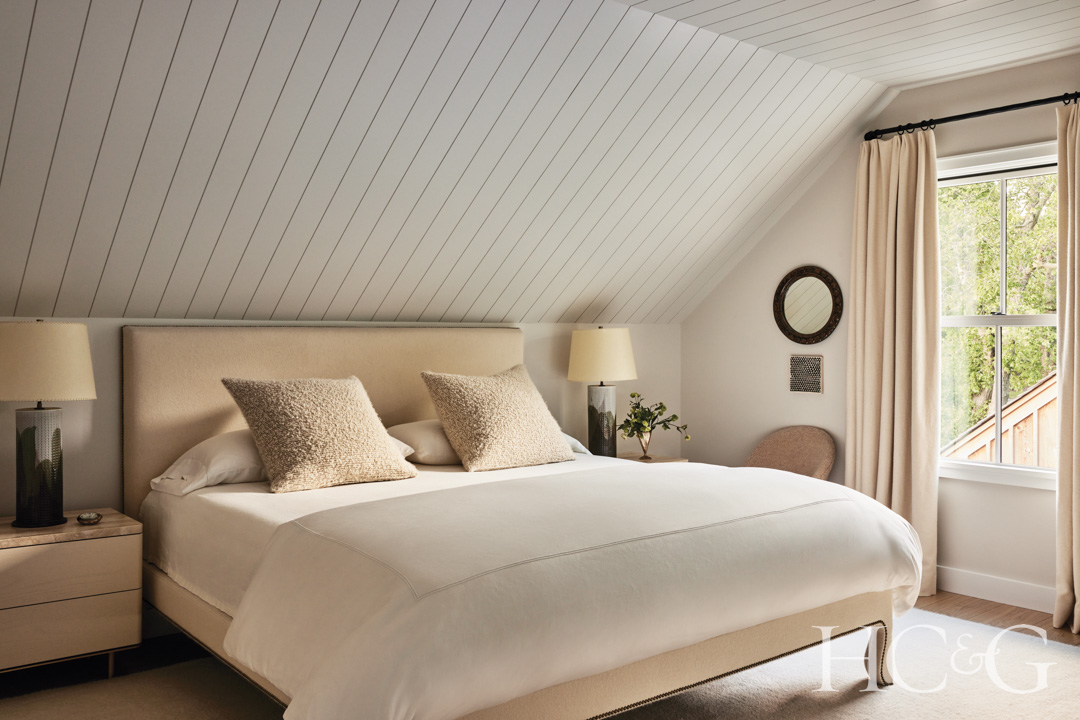
A custom bed is covered in linens from Frette in the primary bedroom. The table lamps are from The 1818 Collective.
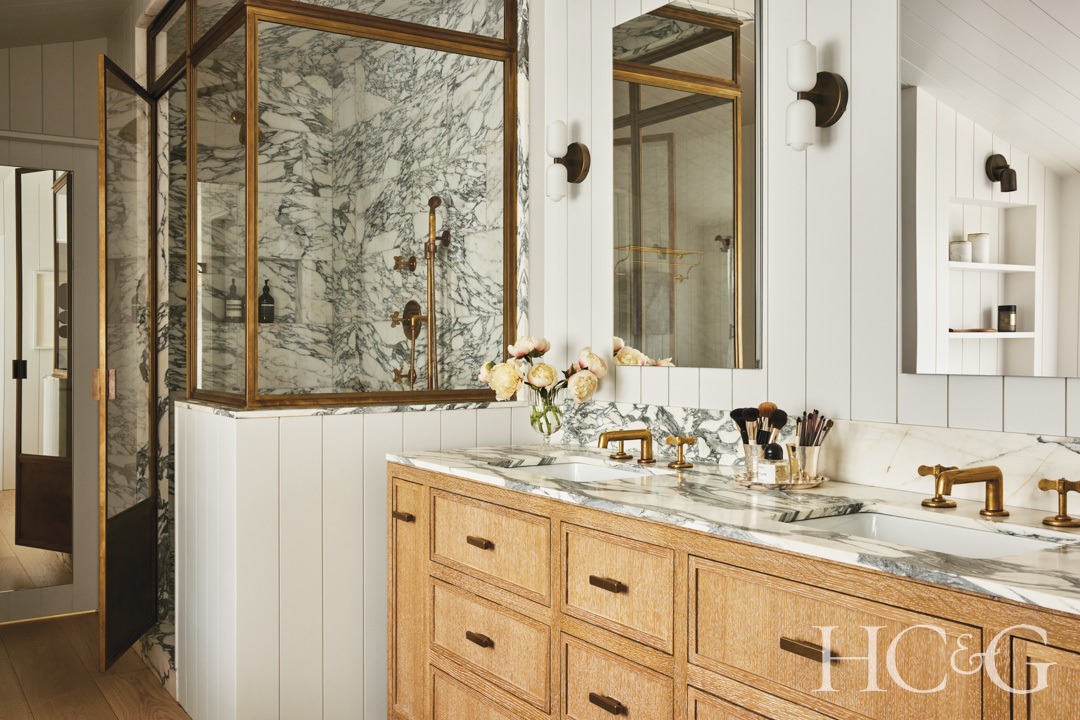

The café curtain fabric is from ALT For Living, and the tub hardware is from Waterworks.
You’ve created a highly personal home within a small footprint, and have proven that a cottage can be just as layered, sophisticated, and luxurious as a sprawling estate. What sort of details do you focus on to make that happen? It’s not easy!
It definitely isn’t easy. In a smaller home, every decision is amplified, and there is far less room for mistakes. We paid close attention to scale, sightlines, and proportion, making sure each room felt connected to the next. Custom millwork played an important role, not only for storage but also for creating architectural interest without adding visual clutter. We also spent a great deal of time layering lighting, which I think is one of the most overlooked elements in a home. Beyond that, it’s really about balance. We mixed antiques with contemporary pieces, incorporated natural textures, and focused on quality over quantity. When a home is small, you become incredibly selective. Every piece needs to contribute something, whether it’s beauty, function, history, or a sense of comfort. The goal was never to make the house feel larger than it is. It was to create a home that feels collected, layered, and deeply personal while still maintaining a sense of ease.

Many of the furnishings, art, antiques, and objects were discovered through local artists, artisans, makers, and through your Sag Harbor business, The 1818 Collective. How important was that to you?
It was very important, although not exclusively local. I’ve always thought of this house as a little jewel box, and part of its charm is that every piece has been carefully considered and collected over time. Through The 1818 Collective, I’m fortunate to work with artists, artisans, and makers from Sag Harbor and far beyond. Many of the people we represent are based throughout Europe and in places that James and I love to travel to. We have always been drawn to a more European sensibility, homes that feel collected rather than decorated, and those influences naturally found their way into this house. What feels especially meaningful is being able to bring those discoveries into our own home and, in turn, introduce them to our community. The house reflects not only where we live, but also the people, places, and makers that have inspired us along the way. That layering of influences is what makes it feel personal.

Tell us a little bit about the creative community you’ve discovered in the area.
One of the things I love most about Sag Harbor is the incredible concentration of creative people who have chosen to make a life here. There is an inspiring mix of artists, designers, architects, writers, makers, and entrepreneurs, all bringing different perspectives and experiences to a relatively small community. What I find most refreshing is how approachable and supportive that community is. There is a genuine willingness to share ideas, collaborate, and champion one another’s work. It feels less competitive and more connected than many creative environments I’ve experienced elsewhere. For me, creativity here extends beyond galleries and studios. It’s reflected in the historic homes being thoughtfully restored, the local businesses being built, the gardens being cultivated, and the people who are continually investing in the character of the village. That collective creativity is part of what makes Sag Harbor such a special place to live.

What do you love most about living Out East all year?
What I love most about living Out East year-round is experiencing the seasons so intimately. The light is constantly changing, and each season brings a different kind of beauty and inspiration. Fall is especially magical. The colors are extraordinary, and spring is equally rewarding as the gardens awaken, flowers emerge, and cardinals return to nest around the property. I love paying attention to what thrives each season and planning for the next, whether it’s planting alliums for the following year or waiting for our magnolia vine to bloom in the summer. Winter is undeniably quiet and cold, but we’ve learned to appreciate that too. It’s a time to slow down, gather around the fire pit, catch up on favorite films, and plan our next adventures. After more than twenty years of living full-time in New York City, there is something incredibly comforting about this rhythm. It keeps us connected to nature, to the passing of time, and to the things that matter most.
